Hiring a low voltage installation company in Lake City, CO means hiring for one mobilization, because every return trip up the canyon costs you money. Low voltage covers the signal side of a building: data cable, cameras, door readers, intercoms, alarms, and control wiring running at 50 volts or less. Here is what gets installed, what it costs in 2026, who permits it in Hinsdale County, and how to vet the crew before they open a wall.
What a Low Voltage Installation Company Installs
Low voltage is not four unrelated products. The systems below share one pathway plan, one enclosure, and one rough-in window, which is exactly why bundling them keeps remote jobs affordable.
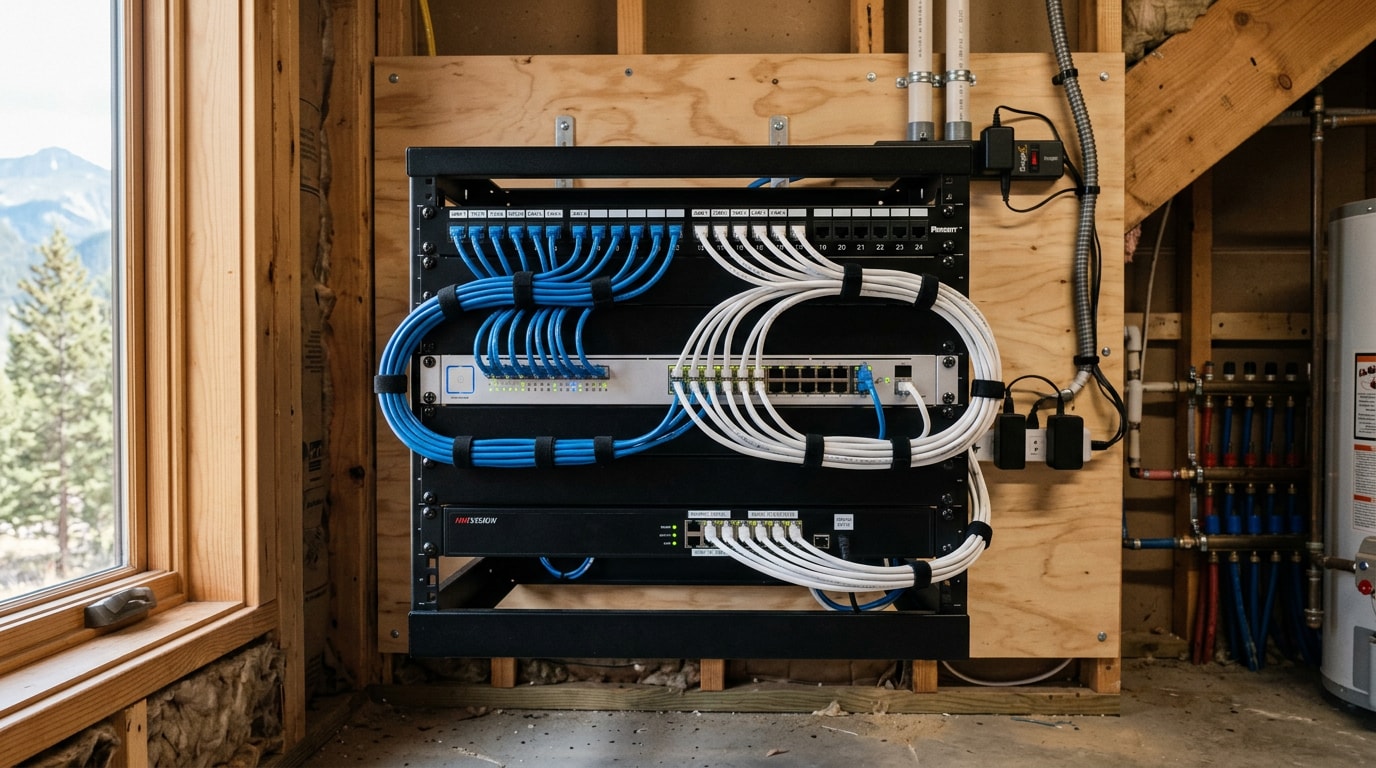
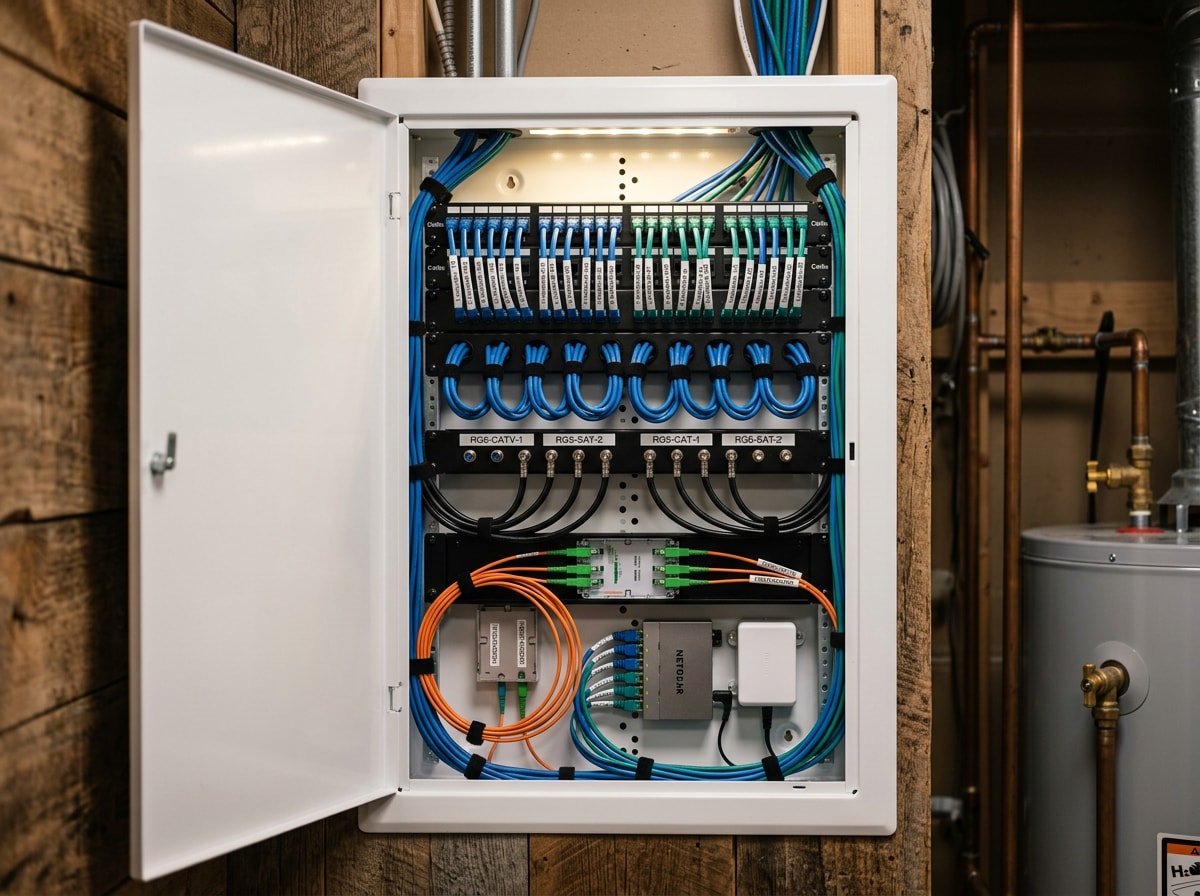
- Structured data cabling: Cat6 or Cat6a drops, patch panel, media enclosure, labeled at both ends.
- Fiber backbone: building to building or shop to house, where distance or lightning exposure rules out copper.
- Cameras and NVR: PoE cameras home run to a switch, recorder in a conditioned, locked space.
- Access control: readers, door controller, electric strike or maglock, power supply, each with its own cable home.
- Intercom and video doorbells: pulled during the same rough-in as the door hardware.
- Alarm and sensor wiring: panel, sirens, contacts, and detection devices.
- Control wiring for smart systems: shades, thermostats, audio, and automation hubs.
The control side ties directly into the power side, so we coordinate it with our home automation installation work, including smart home conversion and smart lighting installation.
Low Voltage Installation Costs in Lake City, CO (2026 Planning Ranges)
These are planning ranges for budgeting a scope, not quotes. Drop count, cable type, retrofit versus new construction, and travel all move the number.
| Scope | Typical planning range | What drives it |
|---|---|---|
| Added data drop, new construction pre-wire | $150 to $300 per drop | Run length, drop density, enclosure location |
| Added data drop, finished walls (retrofit) | $250 to $500 per drop | Fishing walls, access, drywall patching |
| Whole-home pre-wire, small cabin (8 to 12 drops) | Low thousands | Drop count, fiber, coax, conduit sleeves |
| PoE camera, each | $250 to $600 | Mounting height, cable path, NVR capacity |
| Access-controlled door, each | $900 to $2,500 | Reader type, strike vs maglock, fail-safe wiring |
| Rack or enclosure build and certification testing | Priced per job | Port count, documentation, test reporting |
| Remote site mobilization | Quoted upfront | Mileage, seasonal access, staging |
Two cost notes specific to Hinsdale County:
- Mobilization is a real line item here, not a hidden fee. One combined rough-in beats three separate trips.
- A spare run costs a few dollars of cable at rough-in. The same run after drywall can cost ten times that, plus a return trip.
For a written number on your scope, get a free estimate and send a floor plan if you have one.
Permits and Licensing: Who Actually Signs Off in Hinsdale County
This is the part most national pages get wrong for our area, so here is the local detail.
Building permits for projects in Hinsdale County and the Town of Lake City go through the <a href="https://hinsdalecounty.colorado.gov/building-department-10">Hinsdale County Building Department</a> on Henson Street. Electrical and plumbing permits do not. Those go through the State of Colorado, and a state electrical inspector handles the inspection. Permits inside Lake City town limits are paid to the Town, while use tax is paid to the County. That split catches out-of-area contractors every season.
On licensing, the <a href="https://dpo.colorado.gov/Electrical">Colorado State Electrical Board</a> licenses electricians and electrical contractors, and it does not regulate communication systems or data processing systems. That is why most structured cabling under 50 volts is outside state electrical licensing. The exemptions are specific, though, and fire alarm and life safety work are treated differently. Anything that ties low voltage gear to building power, like a transformer, a PoE switch circuit, or a camera power supply, lands back on the licensed electrical side.
Practical takeaway: ask any bidder two questions. Who pulls the state electrical permit for the power side, and who is responsible for the cabling test report.
We confirm the authority having jurisdiction before quoting, and we schedule around the state inspector's route, which is not a same-day visit out here.
How a Commercial Low Voltage Install Runs, Start to Finish
Every commercial job moves through the same stages, in order:
- Site assessment. Walk the building, map pathways, pick the closet or rack location, inventory existing infrastructure.
- Design and pathway planning. Drop counts per room, conduit and sleeve needs, coordination with the electrical layout.
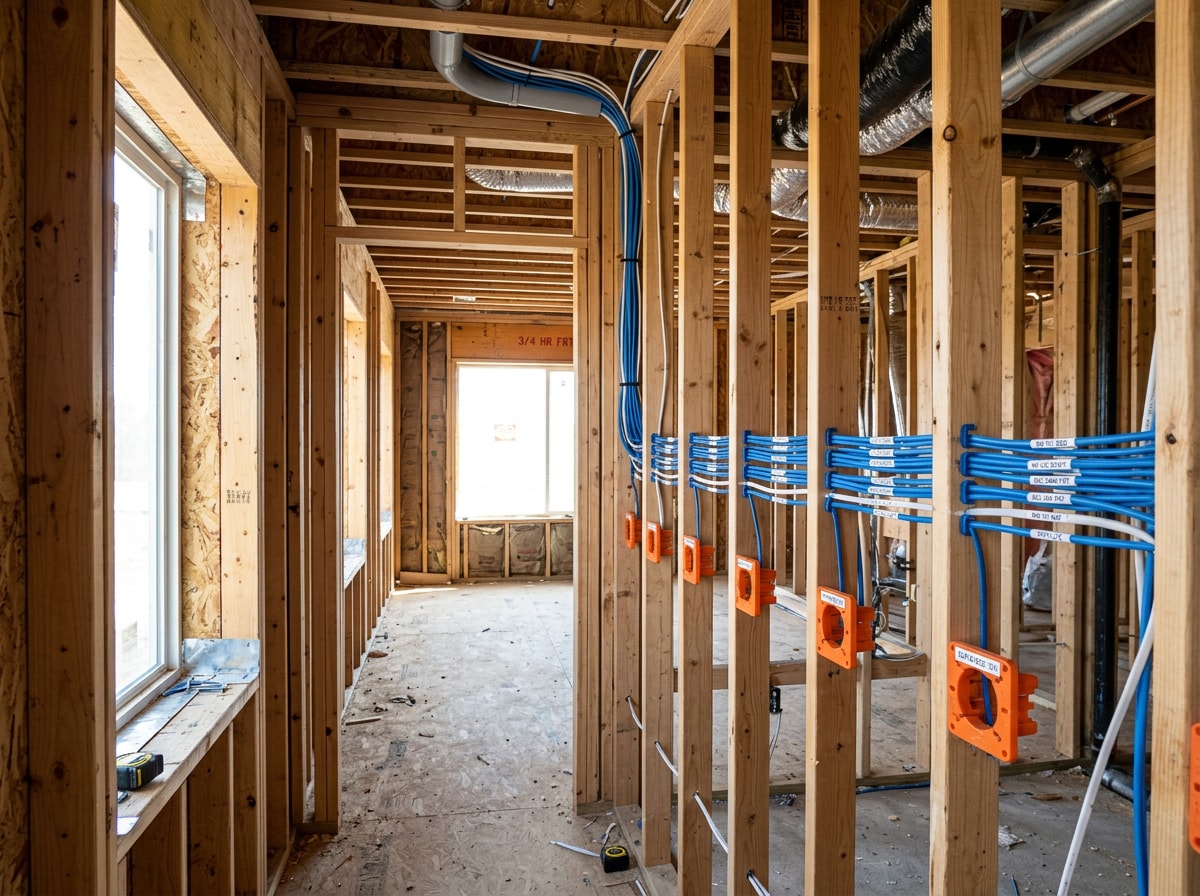
- Rough-in and cable pulls. Cable in before walls close, with correct bend radius, support, and separation from line voltage.
- Termination. Jacks, patch panels, and devices landed to spec.
- Labeling and documentation. Both ends marked, with a port map you keep.
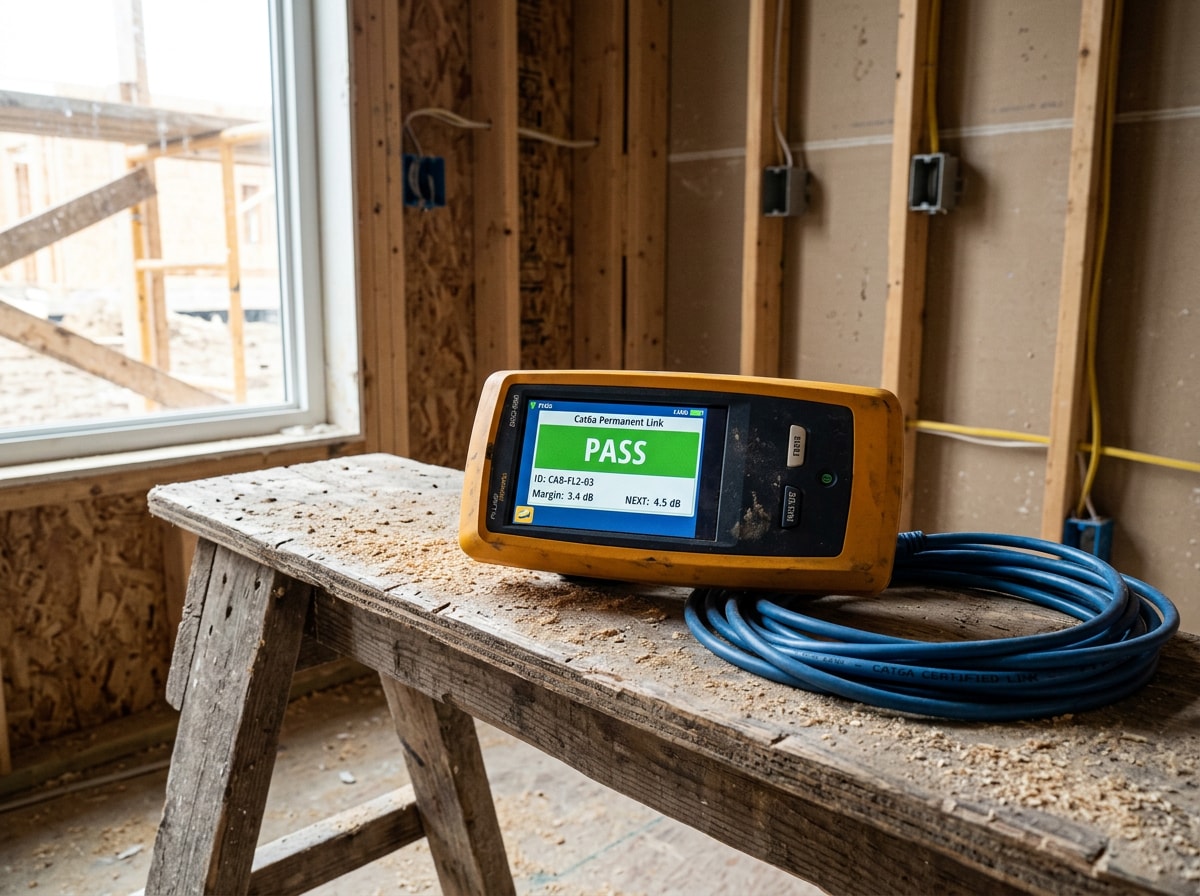
- Certification testing. Every link tested with a calibrated tester, results saved as a report.
Certification testing is not "it works when we plug it in." Each permanent link gets measured against the <a href="https://tiaonline.org/standard/tia-568/">ANSI/TIA-568 commercial building cabling standard</a> for insertion loss, crosstalk, and length, and you keep the pass or fail record. That report is what lets a future tech troubleshoot a port in ten minutes instead of two hours.
Separation matters just as much. NEC Article 725 governs Class 2 power-limited circuits, and it restricts running them alongside line voltage conductors without barriers or spacing. We keep the runs apart and cross at right angles where they must meet. Clean signal and a compliant install come from the same habit.
If an existing system is already misbehaving, start with electrical inspection and troubleshooting rather than adding cable on top of a bad foundation.
Cabin, Short-Term Rental, and Off-Grid Realities Up Here
Lake City jobs are not metro jobs with longer drive times. Three things change the design:
Intermittent internet. Plan for the outage, not the brochure. Local NVR recording keeps rolling when the connection drops, and event-only or cellular alerts handle notification when bandwidth comes back. Cloud-only cameras are the wrong product for a cabin on a marginal link.
Unoccupied weeks. Vacation rentals and seasonal cabins need keyless entry so codes change between guests, plus door logs the owner can read remotely. The same hardware covers shops, offices, and county facilities with a handful of doors.
Power quality and lightning. Summer storms at elevation take out network gear far more often than they take out the structure. We put surge protection installation on the panel and on the rack, and we prefer a fiber link between detached buildings so a hit on one structure does not travel down a copper run into the other.
One field habit from our crews: on properties past the end of maintained plowing, we stage materials and plan the rough-in as a single multi-day trip, because a forgotten patch panel in shoulder season is a lost day, not a lost hour.
Pre-Wire for Builders and Contractors
The pre-wire window is narrow. Low voltage goes in after rough electrical and before insulation and drywall. Miss it and you are writing a change order.
Builders working with us get:
- Blueprint or CAD review before the bid
- A written drop schedule by room
- A committed rough-in date that fits the build calendar
- Conduit and sleeve callouts coordinated with the electrician
- A superintendent contact who answers during the week
This pairs naturally with new residential electrical construction and commercial electrical construction, since one crew coordinating both sides removes the usual finger-pointing over who missed a wall. EV-ready garages are part of the same conversation, which is why EV charging station installation usually gets roughed in at the same stage.
Send plans through our contact page and we will mark them up.
Service Area
We work on single-family homes and cabins, short-term rentals, lodges and guest properties, retail and restaurant spaces, municipal and county buildings, and ranch properties where the nearest neighbor is a few miles off.
Our coverage centers on Lake City, CO and extends across Hinsdale County, including Lake San Cristobal, the Lake Fork corridor, Powderhorn, and into Gunnison County. Travel to outlying sites is quoted upfront, never added after the fact.
Businesses that need fast response on a failed camera system or dead network closet can also read our guide to emergency commercial electrical response in Lake City.
FAQ
What is a low voltage wiring contractor?
A low voltage wiring contractor installs, maintains, and repairs systems running at 50 volts or less: network cabling, cameras, access control, intercoms, alarms, and audio. An electrician handles the line voltage power feeding the building. Different circuits, different tools, different testing.
Do you need a license for low voltage work in Colorado?
Colorado's State Electrical Board licenses electricians and electrical contractors but does not regulate communication or data processing systems, so most structured cabling under 50 volts falls outside state electrical licensing. Fire alarm and life safety work are handled differently, and any connection to building power requires licensed electrical work. Confirm current requirements for your specific scope before you hire.
Do low voltage installations need a permit in Lake City?
The cabling itself usually does not. The building project around it does, through the Hinsdale County Building Department, and any associated electrical permit goes through the State of Colorado with a state inspector. Permits inside town limits are paid to the Town of Lake City.
How much does low voltage cable installation cost?
Budget roughly $150 to $300 per drop at new construction pre-wire and $250 to $500 per drop in finished walls. Small whole-home pre-wires often land in the low thousands. On remote mountain sites, add mobilization as its own line item.
What is structured cabling?
Structured cabling is one standardized, documented system carrying voice, data, video, and security traffic through a shared backbone, patch panel, and labeled drops. It replaces point-to-point runs added one at a time, which makes troubleshooting faster and expansion cheaper.
Cat6 or Cat6a for a new build?
Cat6 handles 1 Gbps everywhere and 10 Gbps on short runs. Cat6a holds 10 Gbps across the full 100 meter channel and tolerates PoE heat better. On a new build, the cable is the cheap part and the labor is the expensive part, so Cat6a on longer runs and camera drops is usually the better buy.
How many data drops should each room get?
Two per primary room is a reasonable baseline, with extras at the TV wall, the office, each wireless access point location, and any future camera position. Decide drop count and enclosure location before framing closes.
Can I run Ethernet myself?
You can, and plenty of owners do. What usually fails is bend radius, staple damage, separation from line voltage, and the absence of a test report, so the cable physically exists but never performs. If you self-perform, at minimum have the links certified.
What is PoE and why does it matter here?
Power over Ethernet delivers data and power to a camera, reader, or access point over one cable. For remote properties it means fewer line voltage runs, fewer devices needing a nearby outlet, and a single UPS at the rack keeping the whole system alive through a short outage.
Who do I call to get started?
Lake Fork Electric handles the low voltage and line voltage sides together across Hinsdale and Gunnison counties. Our licensed electricians and cabling techs will scope the job, confirm the permit path with the AHJ, and give you a written number. Start on our homepage or request a free estimate.