If you are searching for an emergency commercial electrician near me in Lake City, CO, you probably have a dark building, a warm panel, or a walk-in cooler on a countdown. This page covers what actually qualifies as an emergency, the five minutes of triage that happen before a truck rolls, what after-hours work costs in Hinsdale County, and how to verify the contractor you are about to hand your building to. Start here: call our on-call line through the contact page and we will begin triage while the van is loading.
What Counts as a Commercial Electrical Emergency
Not every problem needs a 2 a.m. dispatch. These do.
- A burning or "hot plastic" smell near a panel, disconnect, or outlet
- Smoke, sparking, or an audible pop from gear
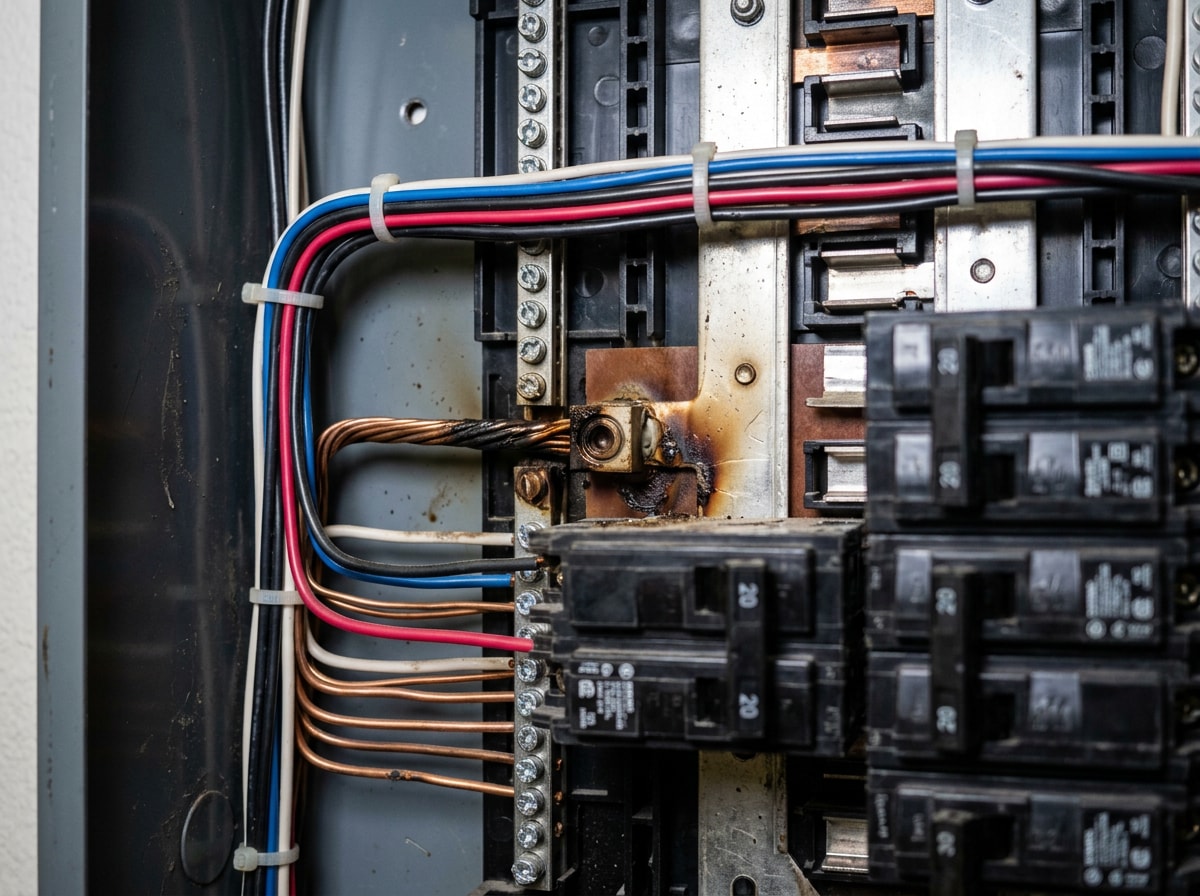
- A panel enclosure that is warm to the touch or browning around a breaker
- Total loss of power to life safety systems, refrigeration, heat, or POS
- Water intrusion into a panel, gear room, or motor control center
- Repeat tripping on the same circuit feeding critical equipment
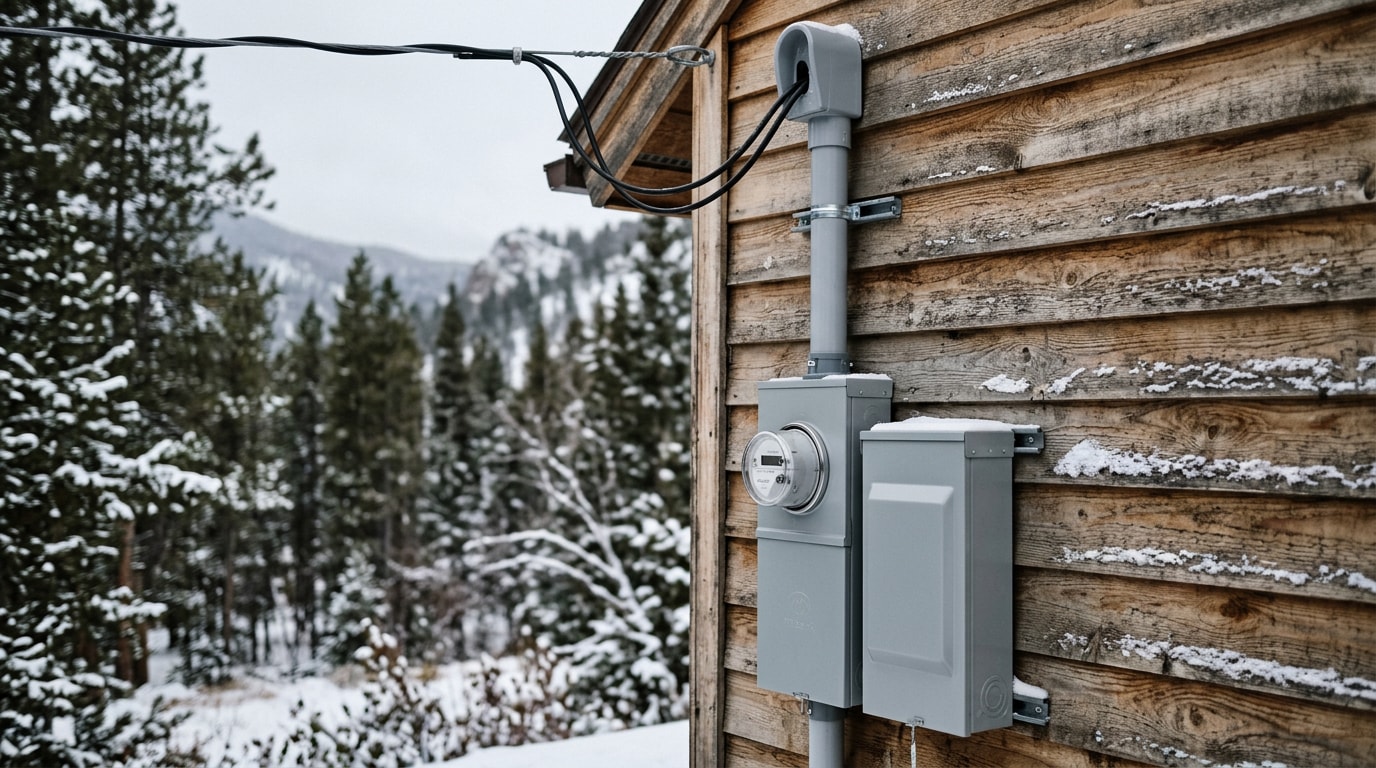
- Storm, snow load, or vehicle damage to a service mast or meter base
- Any arc flash event, even if the equipment appears to still run
Commercial systems rarely fail all at once. They telegraph. Discoloration, buzzing, nuisance tripping, and flickering under load usually show up weeks before the failure that closes you for a night.
If you smell burning near a panel, stop. Do not open the cover and do not hunt for the source. Clear the area, keep people away from the gear room, and call.
The First Five Minutes: Triage Before We Arrive
Drive times in Hinsdale County are long. What you do before we get there often matters more than how fast we get there.
- Check whether it is the utility, not you. Look at neighbors and streetlights. Report and confirm outages with the co-op through the Gunnison County Electric Association outage center. If the co-op is working a line fault, no electrician can restore your power.
- Do not reset a breaker twice. One reset is diagnostic. Repeated resets into a fault are how a hidden hot spot becomes a fire.
- Shed load. Turn off motors, heaters, cooking equipment, and anything that was running when the fault occurred.
- Protect inventory first. Keep cooler and freezer doors shut. A closed commercial walk-in holds temperature far longer than one that gets opened every ten minutes.
- Photograph the panel directory and the nameplate. A clear photo of the panel schedule, main breaker rating, and equipment nameplate lets us stage the right parts before leaving.
- Write down the time and the sequence. What tripped, in what order, and what was running. That sequence is half the diagnosis.
We ask for those photos on nearly every after-hours call. On one Lake City call, a photo of a scorched lug on the load side of a 200A main told us to bring a replacement main breaker and torque tools, which turned a likely two-visit job into one.
24/7 Availability and Realistic Response Times in Lake City
We answer the phone nights, weekends, and holidays for commercial, industrial, and institutional clients across Lake City and Hinsdale County.
Here is the honest part. Highway 149 and Slumgullion Pass in a February storm do not care about a dispatch promise. Anyone advertising a flat "30 minute response" in this county is selling you something.
What you should expect instead:
- A live human on the first call, not a voicemail box
- A realistic arrival window based on current road conditions, given on that call
- Phone coaching through shutdown and isolation steps in the meantime
- A clear statement of what we can stabilize tonight versus what needs a scheduled return
Remote does not mean unserved. It means the plan has to account for the drive. See coverage details on our Lake City, CO service area page or our Gunnison County, CO page.
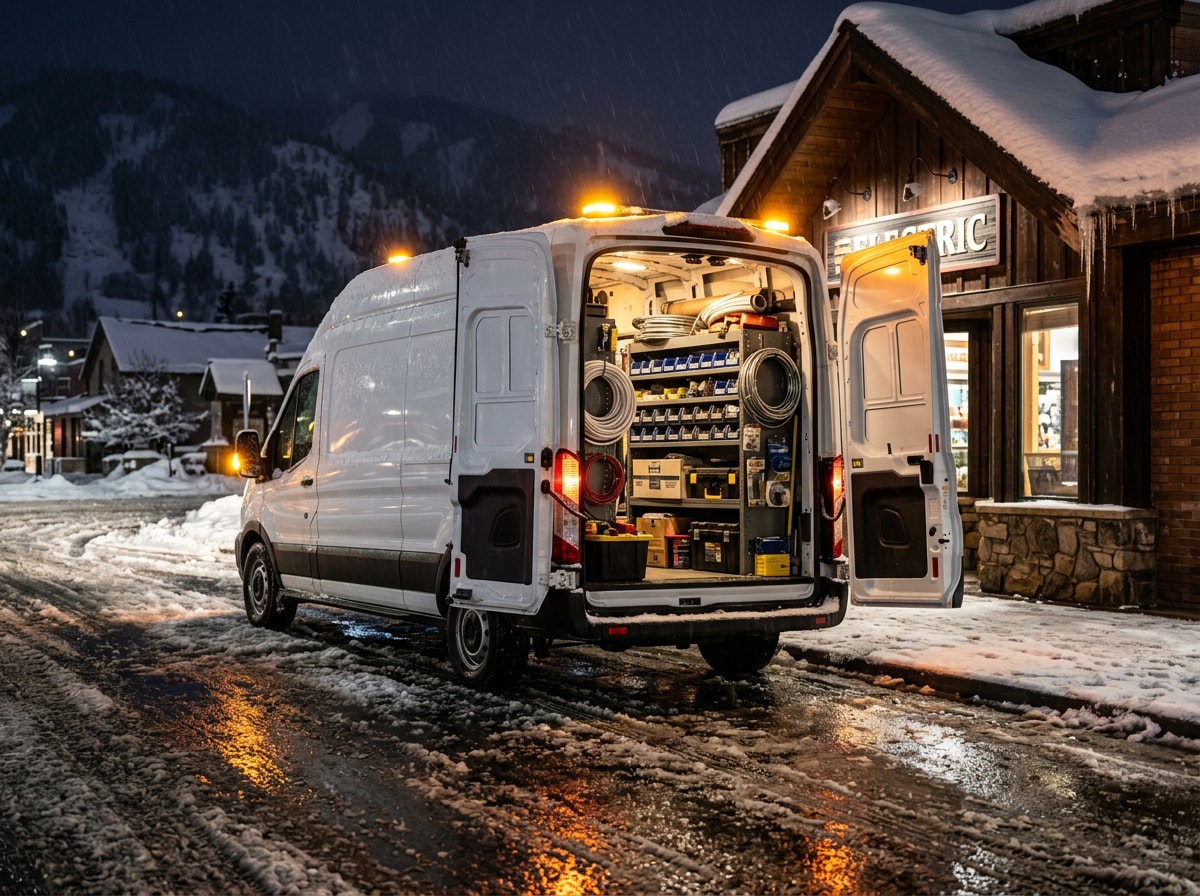
Emergency Commercial Electrical Services We Handle
After hours, the same handful of calls repeat. Each follows the same pattern: make the building safe tonight, then complete the permanent repair on a scheduled visit with the right parts.
Power Loss on Your Side of the Meter
Once the utility is ruled out, the fault is in your service, panel, feeders, or a branch circuit. In most cases we can restore power to critical loads with a temporary repair, then return to do the permanent work properly.
Generator and Transfer Switch Failure
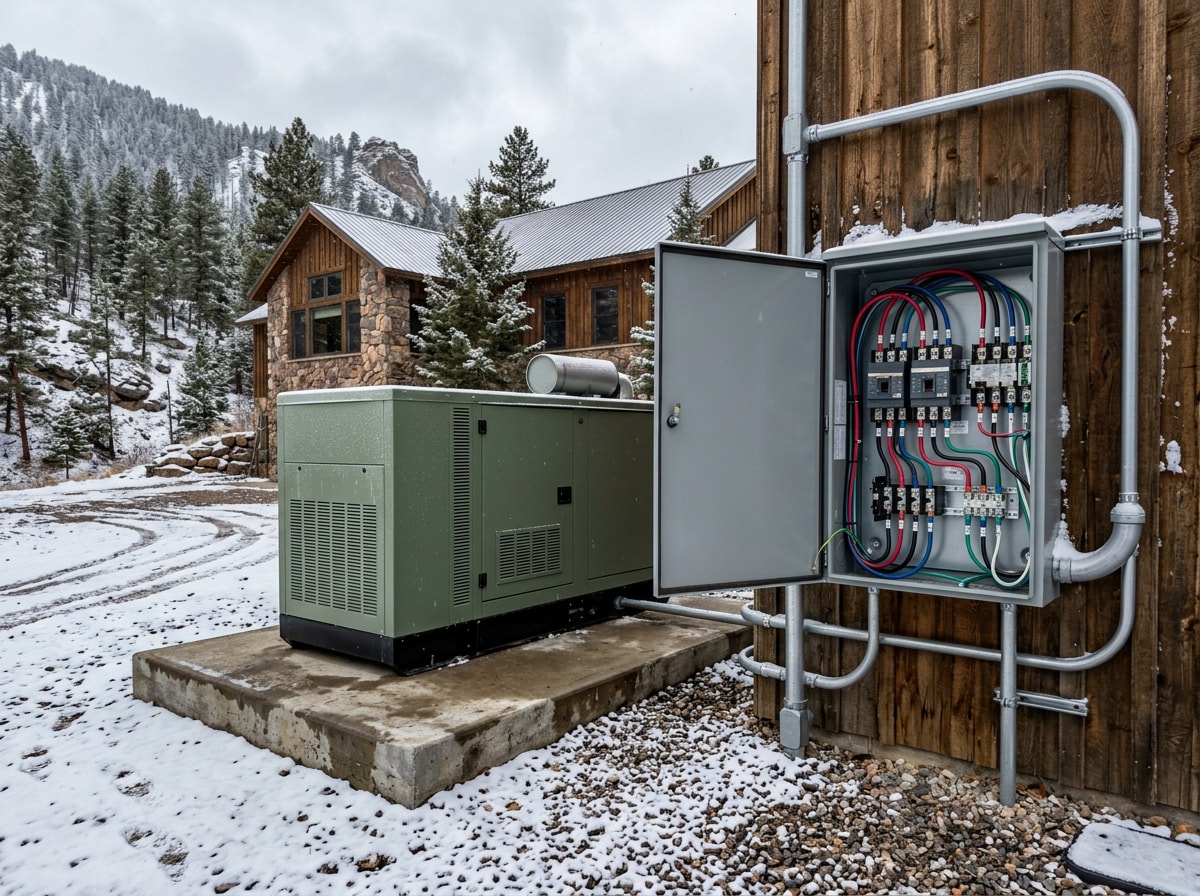
Most standby failures trace to three causes: a transfer switch that will not pick up the load, a fuel system problem, or dead starting batteries.
Altitude matters here. Lake City sits near 8,700 feet, and engine generators lose rated output as elevation climbs. Ask for the derated kW at your actual elevation, not the nameplate rating on the brochure. Cold starts and fuel gelling are the practical reasons backup power quits here in January, not a manufacturing defect.
Generator repair is a distinct skill set from general wiring. Ask any contractor directly whether they service transfer switches, then ask what brands. Our backup generator wiring and installation work covers both new sets and retrofits.
Panel, Breaker, and Switchgear Failure
A failed panel does not always mean a same-night replacement. Often we can swap a faulty breaker or set a temporary sub-panel to carry essential loads while replacement gear is on order.
That distinction matters in a remote mountain market. Commercial breakers and switchgear can take weeks to arrive. The full replacement happens once the emergency is stabilized and parts land. If your building is already due for one, our guide to an electrical service change in Lake City, CO explains what gets replaced and what it costs.
After a Fire or Arc Flash Event
Nothing gets re-energized until a qualified person assesses the damage. That means inspecting conductors, terminations, and equipment, then documenting condition in writing, which is paperwork your insurer will want.
Do not let staff reset a breaker to "see if it works." Re-energizing damaged gear can cause a second, worse event. OSHA's electrical standards in 29 CFR 1910 Subpart S require electrical equipment to be free of recognized hazards and examined before use.
Storm, Water, and Freeze Damage
Snow load on service masts, ice on overhead drops, and water in a gear room are all winter regulars here. Wet gear is replaced, not dried out and reused.
What an Emergency Commercial Electrician Costs in Lake City
Emergency work generally runs 1.5 to 2 times the standard hourly rate, plus a trip charge and a labor minimum. The figures below are planning ranges for this market, not a quote.
| Line item | Standard hours | After-hours emergency | Weekend / holiday |
|---|---|---|---|
| Trip fee | $75 to $150 | $100 to $175 | $125 to $200 |
| Hourly rate | $75 to $150 | $150 to $250 | $185 to $300 |
| Labor minimum | 1 to 2 hrs | 2 hrs | 2 to 4 hrs |
| Typical all-in, diagnostic plus minor repair | $150 to $450 | $400 to $675 | $500 to $1,400 |
Three things move the number in Hinsdale County specifically:
- Drive distance. Remote service areas carry higher trip costs than Front Range metro averages. This is the single biggest variance.
- Parts availability. If the part is not on the truck, you pay for a temporary fix tonight and a scheduled return.
- Access and conditions. Snow, night work, and confined gear rooms all slow the job.
The premium buys on-call techs, stocked trucks, and live dispatch at 2 a.m. One local example: a restaurant lost the circuit feeding its walk-in on a Saturday night. A breaker replacement plus a temporary feed landed in the middle of the weekend band, well under the value of the inventory it saved.
For non-urgent work, book during business hours. The same repair on a Tuesday morning often costs less than half.
How to Vet an Emergency Electrician Before You Hand Over the Building
Urgency is exactly when people skip verification. Two minutes of checking protects you.
- Confirm the license. Colorado licenses electricians at the state level through the Division of Professions and Occupations. Use the Colorado Electrical Board licensing services page to verify the individual, since electrical licenses are issued to people, not company names.
- Ask for a certificate of insurance. General liability plus workers' compensation. Ask for it emailed, not described.
- Ask who pulls the permit. For replacement work, the electrical contractor pulls it, usually the next business day. A contractor who says no permit is needed for a service or panel replacement is telling you something important.
- Ask about commercial experience specifically. Three-phase, motor loads, transfer switches, and code compliance for occupied buildings are different work from residential service calls.
- Get the after-hours rate on the phone. Trip fee, hourly rate, and labor minimum, before dispatch.
We are happy to be checked. Ask us for any of the above on the first call.
Preventing the Next After-Hours Call
Most emergency calls were preventable, and the fix is boring: inspection, torque, thermal scanning, and repairing small faults before they become failures.
What actually reduces unplanned downtime:
- Thermal imaging of panels and gear under load, which finds loose or degraded connections before they fail
- Torque verification on terminations, a common root cause of heat damage
- Facility-level surge protection, which matters on rural distribution lines
- Load-tested backup power with a documented monthly exercise, not just a monthly hum
- A one-page shutdown procedure posted in the gear room that your night staff can follow
- Replacing obsolete panels where breakers are no longer manufactured
Skip the blanket "once a year" rule. High-load operations such as restaurants, lodging, and shops with motors and refrigeration benefit from an inspection every 6 to 12 months. A low-load office can usually stretch longer. Set the interval to the equipment and the duty cycle, not the calendar.
A reference point for why on-site backup matters here: GCEA has reported a Lake City outage that lasted roughly 28 hours, resolved only after a mobile substation was hauled in through Little Blue Canyon. Restaurants and lodges without functioning standby power lost a full day.
Start with electrical inspection and troubleshooting, or plan larger work through our commercial electrical construction team.
Service Area
We respond in Lake City and across Hinsdale County, and serve businesses throughout the region from our base at Lake Fork Electric. Nearby coverage includes Salida, Buena Vista, and Monte Vista. Not sure if you are in range? Call and ask.
Need lighting back up after a failure, or a full retrofit once the emergency is handled? See commercial lighting installation.
FAQ
What is considered an electrical emergency for a business?
Any fault that poses an immediate safety risk or halts critical operations. That includes smoke or sparking, burning smells near a panel, a hot panel enclosure, water in gear, total power loss, and storm damage to the service. If it could cause injury, property damage, or a fire, treat it as an emergency.
Should I call the utility or an electrician first?
The utility, if the outage might be theirs. Check whether neighbors have power, then report it to GCEA. If power is out only in your building, or only on certain circuits, it is on your side of the meter and you need an electrician.
How fast can an emergency electrician reach Lake City?
It depends on weather and road conditions, so ask for a specific window on the call rather than trusting a generic promise. Winter storms on Highway 149 and Slumgullion Pass can add significant time. A good contractor gives you an honest window and coaches you through safety steps in the meantime.
How much does an emergency commercial electrician cost after hours?
Expect roughly 1.5 to 2 times standard rates, plus a trip fee and a two-hour minimum. In this market a typical after-hours diagnostic and minor repair lands around $400 to $675, and weekend or holiday work runs higher. Always confirm the trip fee, hourly rate, and minimum before dispatch.
Is a breaker that keeps tripping an emergency?
Usually yes, if it feeds critical equipment or trips repeatedly. The breaker is doing its job by signaling an overload, short, or ground fault. Do not keep resetting it. Each reset can feed a hazard you cannot see behind the wall.
Can I reset the breaker if I smell burning?
No. Leave it off, clear the area, and call. Re-energizing damaged equipment risks a second and more severe failure, and a qualified person has to examine the gear first.
Do emergency electrical repairs need a permit in Hinsdale County?
Like-for-like emergency repairs are often handled immediately, but replacement work such as a new panel, service, or feeder requires a permit and inspection. In areas without a local building department, permits come through the Colorado State Electrical Board. Your electrical contractor should pull it, typically the next business day.
How do I verify an emergency electrician is licensed and insured?
Ask for the licensed individual's name and license number, then check it against the state's electrical licensing records. Request a certificate of insurance showing general liability and workers' compensation. Any legitimate contractor provides both without hesitation.
Do you work on generators and transfer switches, or only wiring?
Both. Transfer switch failures and generator no-starts are among the most common commercial emergency calls in this area, and they are handled as a distinct service from general wiring.
Get Help Now
If the building is down, do not wait for business hours to make the call. We will triage on the phone, tell you what to shut off, and give you a real arrival window.
Get a Free Estimate for planned work, or call the same line for emergencies. You can also browse all electrician services to see what we cover.
Written and reviewed by the licensed Colorado electricians at Lake Fork Electric, who perform commercial service, generator, and emergency repair work throughout Hinsdale and Gunnison counties. Questions about a specific building or panel? Reach the team directly.