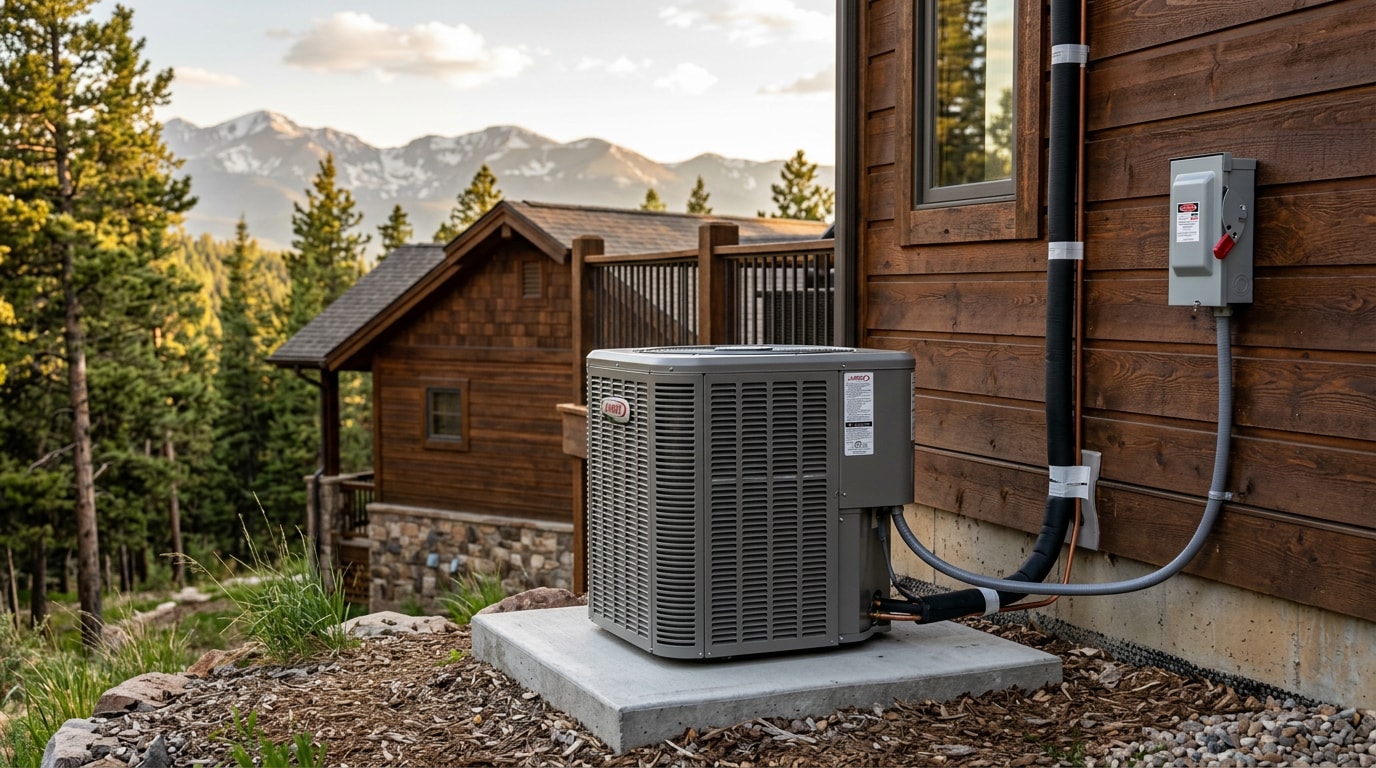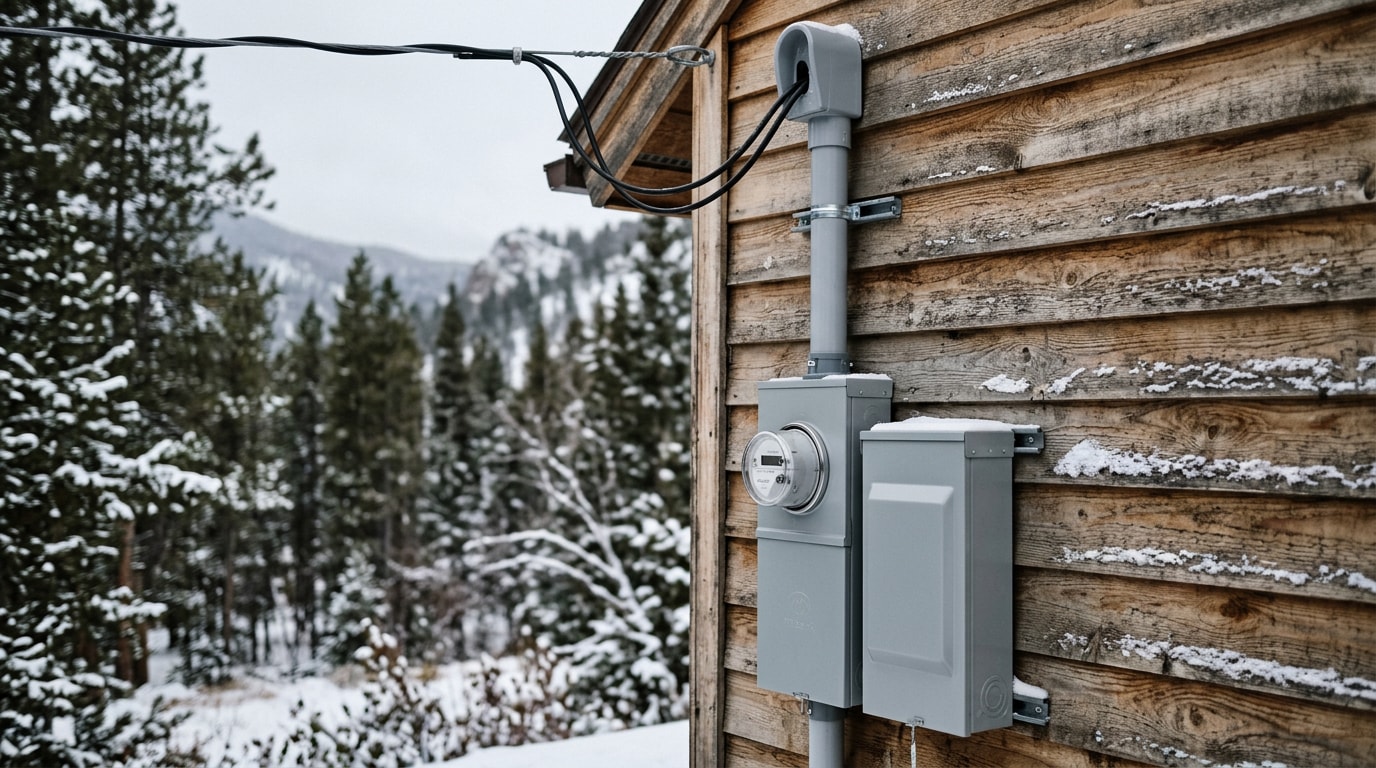
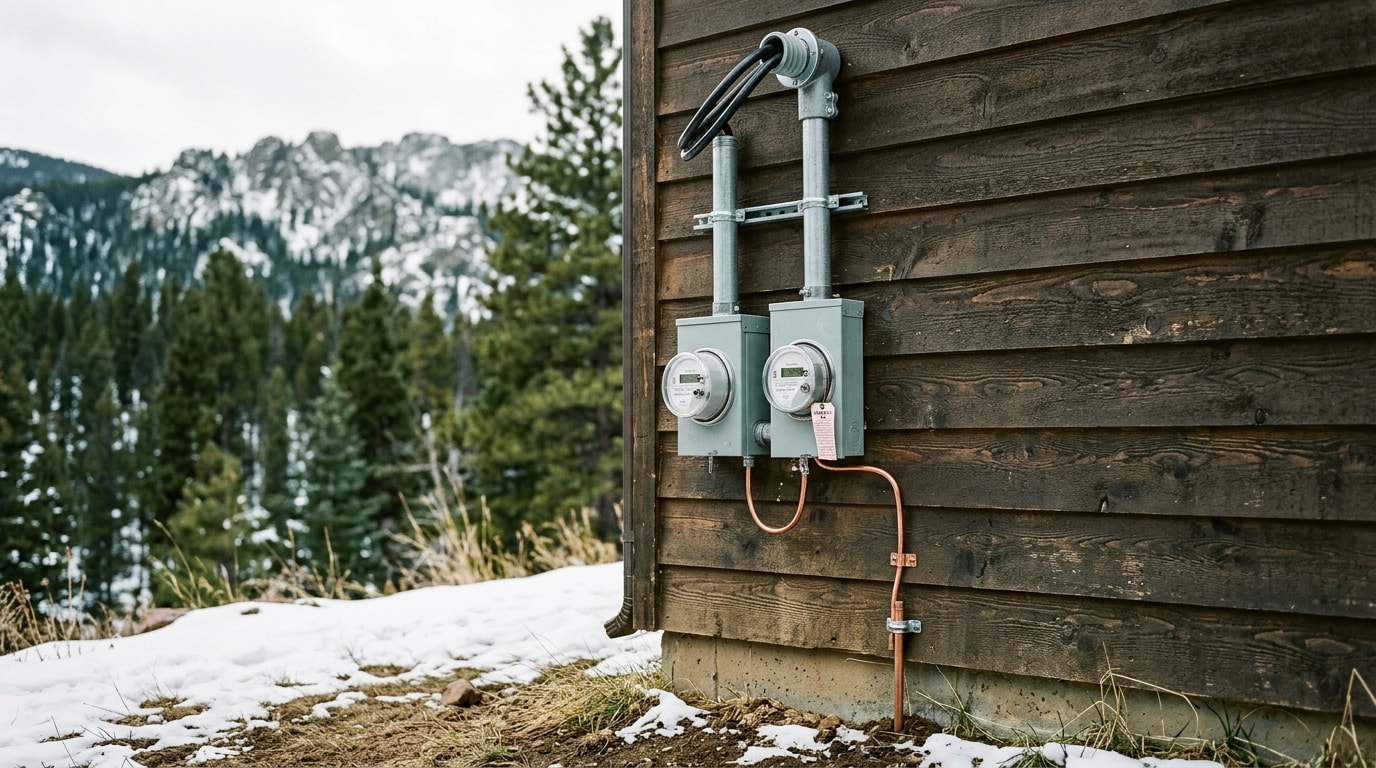
Two contractors can walk the same property, quote an electrical service change in Lake City, CO at $2,400 and $8,500, and both be honest, because they are pricing different scopes of work. This guide breaks down what physically gets replaced, what the job costs in Hinsdale County in 2026, and why state permitting and co-op scheduling, not labor, usually set your timeline.
What an Electrical Service Change Includes
A service change replaces everything carrying power from the utility connection to your main panel: the service entrance conductors, the meter base, the mast, the grounding electrode system, and the panel itself.
People often call it a service upgrade, especially when amperage goes up from 100 to 200.
The two components below are where quotes diverge most, so read any estimate line by line.
Meter Base and Mast
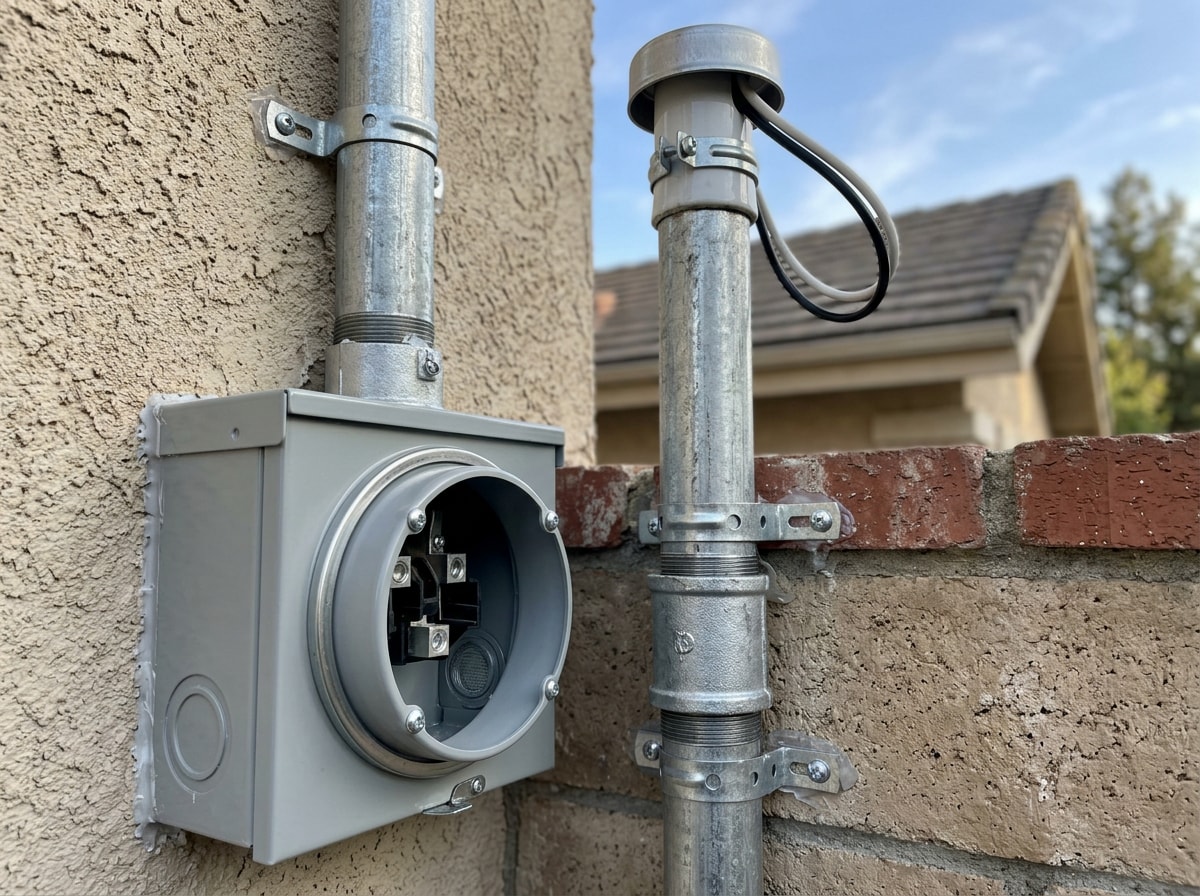
The meter base is the weatherproof enclosure holding your utility meter. It is the transition point between the co-op's wiring and yours.
The service mast is the vertical conduit rising above the roofline that receives the overhead service drop.
Both are usually replaced rather than reused. Decades of UV, snow load, and moisture take a toll, and an older meter base often will not accept the conductor sizes a 200 amp panel requires.
That incompatibility is why a "just swap the panel" quote expands once someone gets on a ladder. If the meter base goes, the mast, weatherhead, and service entrance hardware normally go with it.
Service Panel
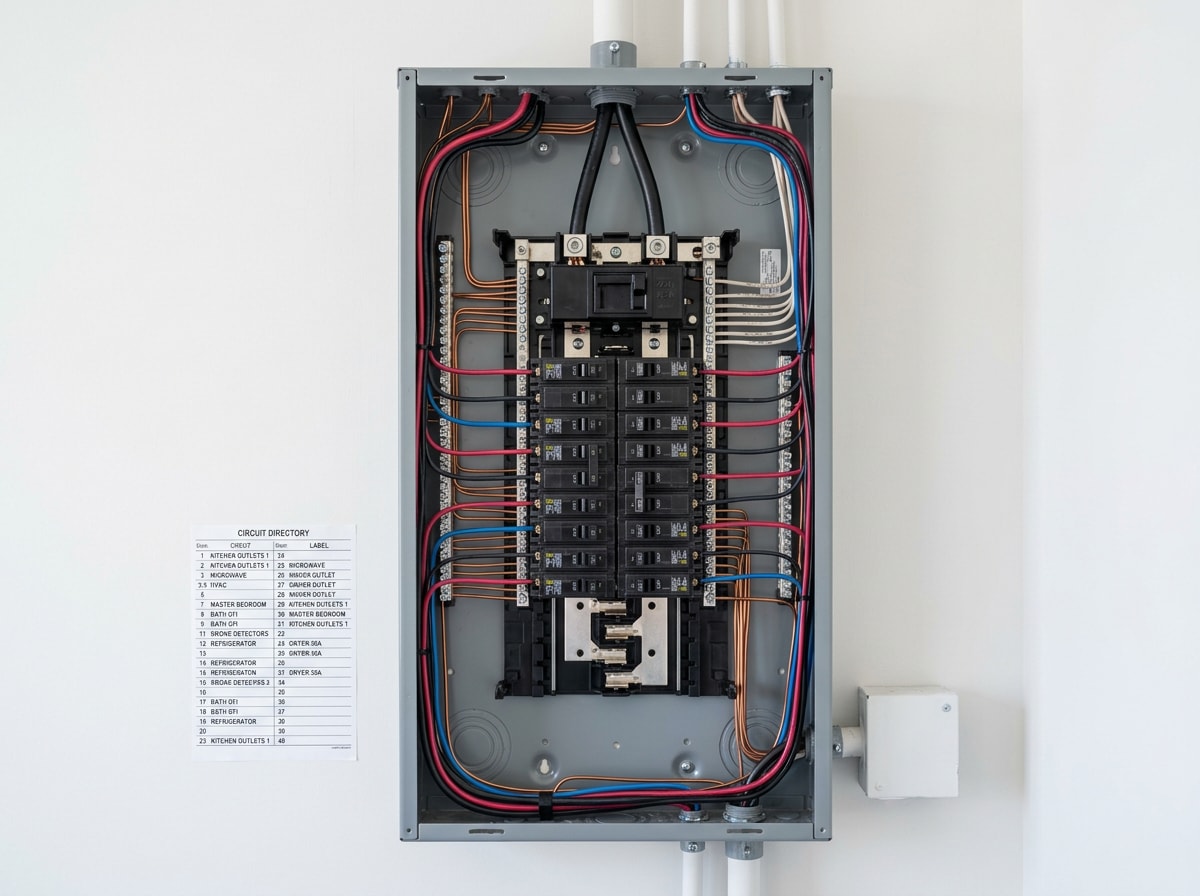
The service panel, also called the breaker box, load center, or on older cabins a fuse box, distributes incoming power across the branch circuits feeding the house.
An undersized or failing panel shows it in measurable ways:
- Breakers that trip under normal household load
- Fuses that blow repeatedly
- Lights that dim when the well pump starts
- Warmth at the panel cover or a burning smell
- Zero open slots, which caps anything you want to add later
A full panel is a capacity problem even when the incoming service is sized adequately.
Electrical Service Change Cost in Lake City, CO (2026)
The ranges below are planning figures for the Western Slope in 2026, blending regional contractor labor rates with national service upgrade pricing. They are not quotes. Every job needs an on-site load calculation and a written scope.
| Panel-only swap | Full service change | Service change plus underground feeder | |
|---|---|---|---|
| Typical cost | $1,800 to $3,500 | $3,500 to $7,500 | $7,000 to $15,000+ |
| Timeline | 1 day of work, 1 to 3 weeks total | 1 day of work, 3 to 6 weeks total | 2 to 4 days of work, 4 to 8 weeks total |
| Right for | Adequate amperage, failing or full panel | 100A service, aged mast and meter, new major loads | Long buried runs with conduit or splice failure |
Where you land inside a range depends on:
- Target amperage (a 400 amp service costs well above typical 200 amp figures)
- Overhead versus underground service
- Feeder run length and trenching conditions
- Circuit count and whether existing branch wiring must be corrected to pass inspection
- Roof pitch, mast height, and snow load hardware
Rural pricing also carries adders that Front Range quotes do not. Crews often stage out of Gunnison or Montrose, so travel time gets built in. Winter scheduling is tighter, weather moves dates, and distributors do not stock gear deep for Hinsdale County, so material lead times stretch.
One practical budgeting note from our own jobs here: the line item homeowners least expect is grounding. When an old single rod or a ground connected to a water line that has since been replaced with plastic turns up, new ground rods become part of the scope, and rocky, frozen ground makes driving them slow.
Get a free estimate in writing before you compare numbers, and make sure both bids describe the same scope.
Signs You Need a Service Change
Demand-side signs usually arrive first. A 100 amp service sized for a 1970s cabin now feeds a heat pump, a well pump, a modern kitchen, and maybe an EV charger through the same conductors. Breakers trip, lights flicker under load, and the panel runs out of slots.
Condition-side signs push a job from repair toward full replacement:
- Aluminum branch circuit wiring. The Consumer Product Safety Commission notes that <a href="https://www.cpsc.gov/s3fs-public/AL_0.pdf">homes built before 1965 are unlikely to have aluminum branch circuits</a>, while cables installed from 1965 into the mid 1970s may.
- Knob and tube wiring in pre-1950s properties, which has no equipment ground.
- Federal Pacific Stab-Lok and Zinsco panels, both of which carry documented breaker performance concerns.
- Corrosion, rodent damage, or water staining inside the enclosure.
If you have one of those panels, have it evaluated by a licensed electrician rather than guessing. Our electrical inspection and troubleshooting crew tests before recommending scope.
Lake City adds triggers the national guides skip. Seasonal properties sit vacant through hard winters, and moisture and rodents find their way into enclosures. Well pumps on long runs draw hard at startup. Adding a hot tub, a shop, or a backup generator frequently tips a marginal service over the line.
Panel Upgrade vs. Service Change vs. Subpanel
Here is the distinction behind those two very different quotes.
| What it replaces | Utility involvement | Adds capacity? | |
|---|---|---|---|
| Panel upgrade | Breaker box only, circuits reconnected | Sometimes a brief disconnect | Only if service conductors already support it |
| Full service change | Conductors, meter base, mast, grounding, panel | Disconnect and reconnect required | Yes |
| Subpanel | Nothing, it adds a second load center | None | No, it adds slots only |
A subpanel is the most misunderstood option. It solves a shortage of breaker slots. It does not add amps. If your 100 amp service is already near capacity, a subpanel just redistributes the same limited supply.
What settles the question is a residential load calculation using the standardized method in the National Electrical Code, which Colorado adopts statewide. It totals your actual connected load and tells you whether 200 amp service is genuinely required.
Ask for that calculation before approving any scope. Our electrical service upgrades page explains how the assessment works.
Permits, Inspection, and Utility Coordination
Hands-on installation is typically one day. The full project runs several weeks, because permitting and utility scheduling sit outside your electrician's control.
Who Issues the Permit in Hinsdale County
This is the detail most statewide cost guides get wrong for Lake City.
Hinsdale County issues building permits, but the county's own building department states plainly that <a href="https://hinsdalecounty.colorado.gov/building-department-10">electrical and plumbing permits go through the State of Colorado</a>, with a named state electrical inspector assigned to the area. Building permits inside town limits are paid to the Town of Lake City, while use tax is paid to the county.
The permit itself comes from the <a href="https://dpo.colorado.gov/Electrical/PermitInspectionInfo">Colorado State Electrical Board</a>, which requires a valid state permit before wiring is installed and inspects in areas not covered by a local authority.
Your licensed contractor pulls that permit and requests the inspection. You should not be filing it.
Practically, inspection scheduling in a remote county is a genuine timeline factor. A state inspector covering a large territory does not reach Lake City on demand, and that visit has to line up with the co-op's reconnect.
Skipping the permit creates durable problems: work that is not code compliant can fail a later inspection, complicate a sale when a buyer's inspector flags unpermitted service work, and give an insurer grounds to contest a claim.
Grounding System Requirements
Nearly every service change includes updating or verifying the grounding electrode system.
Where existing grounding predates current code, new ground rods are commonly required. Occasionally an alternate electrode method is needed when rock stops a rod short. That is labor time, and honest estimates say so up front.
Coordinating With the Co-op
Electric service in Lake City and the surrounding valley comes from Gunnison County Electric Association, a member-owned cooperative serving portions of Gunnison, Hinsdale, and Saguache counties.
Two things follow from that. Reconnects are scheduled around a small crew covering a large territory, so a fixed date beats a hopeful one. And the co-op's construction standards for meter height, clearances, and mast attachment govern the install, not just the code book.
Underground Service Around Lake City
Underground service is not the exception here. GCEA reports roughly <a href="https://www.gcea.coop/about-us/your-cooperative/">651 miles of underground cable against about 459 miles of overhead line</a>, the second-highest share of underground line among Colorado's rural electric cooperatives.
If your home sits well back from the road, the feeder run to the house may be hundreds of feet of buried conduit.
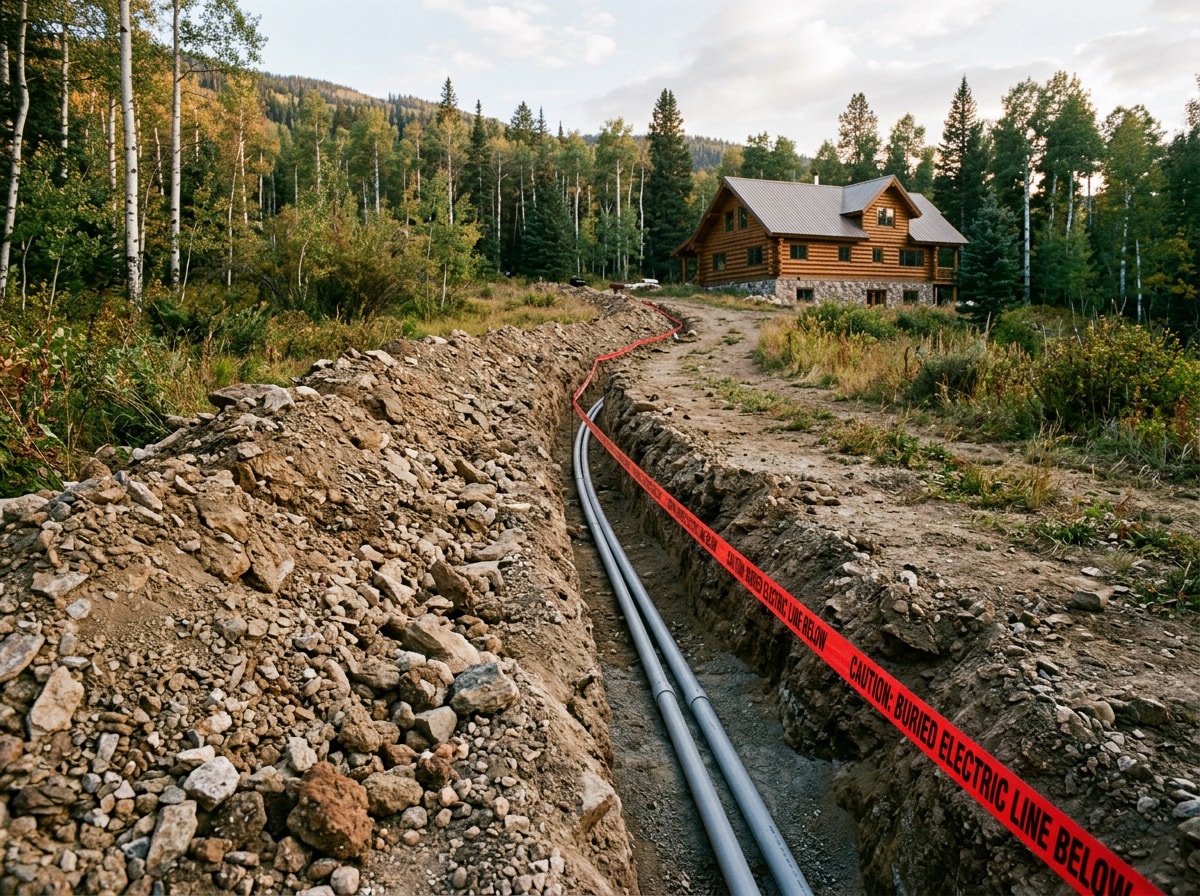
Typical underground failure modes include:
- Crushed or separated conduit from frost heave and ground movement
- Insulation breakdown where water has entered the raceway
- Failed splices at junction points
None of those are visible from the surface. Diagnosis means testing the run, locating the fault, then excavating to reach it. That is why underground service changes price differently: you are paying for diagnosis and dirt work on top of the electrical scope.
Before any digging, locate tickets must be filed with <a href="https://www.colorado811.org/">Colorado 811</a>, which requires notice at least two full business days before excavation begins, not counting the day of notice. Build that window into the schedule. It is a hard dependency.
How to Vet a Service Change Bid
Use these questions on every quote you collect:
- Does the bid include a written load calculation, or just a recommended amperage?
- Is the meter base, mast, and weatherhead included, or listed as a possible extra?
- Who pulls the state electrical permit, and is the fee in the price?
- Are new ground rods included, or excluded pending field conditions?
- What happens if excavation hits rock on an underground run?
- Is the contractor licensed with the Colorado State Electrical Board and insured?
- What is the written warranty on labor and on equipment?
If two bids differ by thousands, the answers above almost always explain it. Our guide to vetting a general electrician covers license verification and estimate red flags in more depth.
Working With a Licensed Local Crew
Lake Fork Electric is a licensed Colorado electrical contractor working across Lake City and Gunnison County, handling service changes, panel replacements, and full electrician services for year-round homes, seasonal cabins, and small commercial buildings.
We have swapped enough winter services here to schedule the outage window for the mildest day available, stage material before the disconnect, and keep heat plans in place for the hours power is down.
Request a written on-site estimate and we will walk the service with you, run the load calculation, and put the scope in writing before anything is ordered.
FAQ
Do I need a permit for an electrical service change in Lake City?
Yes. A state electrical permit and a passing inspection are required before power is reconnected. In Hinsdale County, electrical permitting and inspection run through the State of Colorado rather than the county building department, and your licensed contractor handles both.
How long does a 200 amp service change take?
Installation is usually one working day, sometimes two if grounding or mast work is complicated. Expect three to six weeks total once permitting, state inspection scheduling, and co-op coordination are counted. Utility and inspector calendars are almost always the longest leg.
Will I lose power during the service change?
Yes, temporarily. The co-op disconnects on installation day, the new equipment goes in, and power is restored after inspection sign-off, usually the same day. Schedule the outage for milder weather so your heat is not down during a cold snap.
What is the difference between a panel upgrade and a service change?
A panel upgrade replaces only the breaker box. A service change also replaces the service entrance conductors, meter base, mast, and grounding, and it requires the utility to disconnect and reconnect. Only the second one raises your service capacity.
Is 100 amp service still enough?
For a small cabin with gas heat and modest loads, sometimes yes. It usually is not enough once you add electric heat, a well pump, a hot tub, or EV charging. A load calculation answers it for your house, not a rule of thumb.
Do I need a service upgrade to install an EV charger?
Often, but not always. A Level 2 charger needs its own dedicated 240 volt circuit, commonly 40 to 60 amps. Whether your service supports that depends on total connected load, which is what our EV charging station installation assessment checks first.
Does a service change mean rewiring the whole house?
No. A service change stops at the panel. Existing branch circuits are reconnected as-is, unless the inspector flags defects like missing grounds, damaged conductors, or double-tapped breakers that must be corrected to pass.
Can a homeowner do their own electrical work in Colorado?
The State Electrical Board allows a homeowner to wire their own residence under specific conditions, including obtaining a permit first and passing inspection before anything is covered. Service changes are a poor candidate for it, because utility disconnect coordination and service entrance work carry real shock and arc flash risk.
How often should an electrical system be inspected?
Every three to five years for most homes, and every year or two for older systems. Event-based triggers matter more than the calendar: storm damage, a nearby lightning strike, water intrusion, or an extended vacancy, which is worth noting for seasonal properties.