Hiring industrial electricians in Gunnison County, CO comes down to three checkable things: license class, hands-on experience with motor control and process equipment, and knowing who actually inspects the work. That last one trips up most facility owners, because Gunnison County does not issue electrical permits or perform electrical inspections for electrical installations. Electrical permits are issued by the state, and electrical inspections are conducted by a state electrical inspector. Here is what the work involves, who signs off on it, and the questions worth asking before a contract is signed.
Industrial Electrical Services in Gunnison County, CO
Industrial work runs from first installation through ongoing maintenance, and most plants need both over a system's life. These are the systems Gunnison Valley facilities call about most.
Three-Phase Power Distribution
Three-phase power delivers steady, balanced current that single-phase service cannot sustain under load.
That is what keeps large motors, compressors, chillers, and production lines running without nuisance trips or overheating.
Work in this category splits two ways: new service entrance installations, and modifications to existing industrial wiring as plants expand.
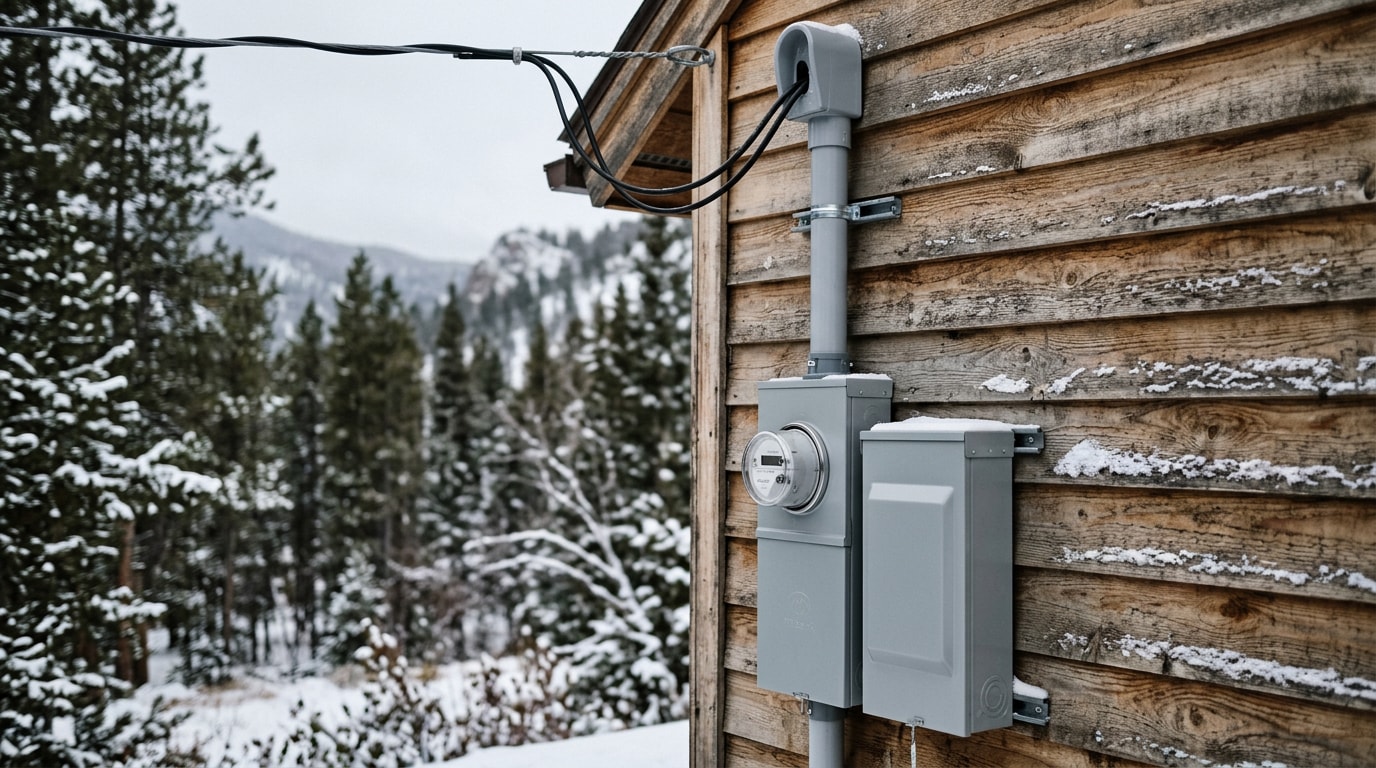
On rural Western Slope sites, utility coordination is usually the longest line item on the schedule. New or upsized service for high-load equipment depends on the provider's timeline, not the contractor's.
Motor Control Centers
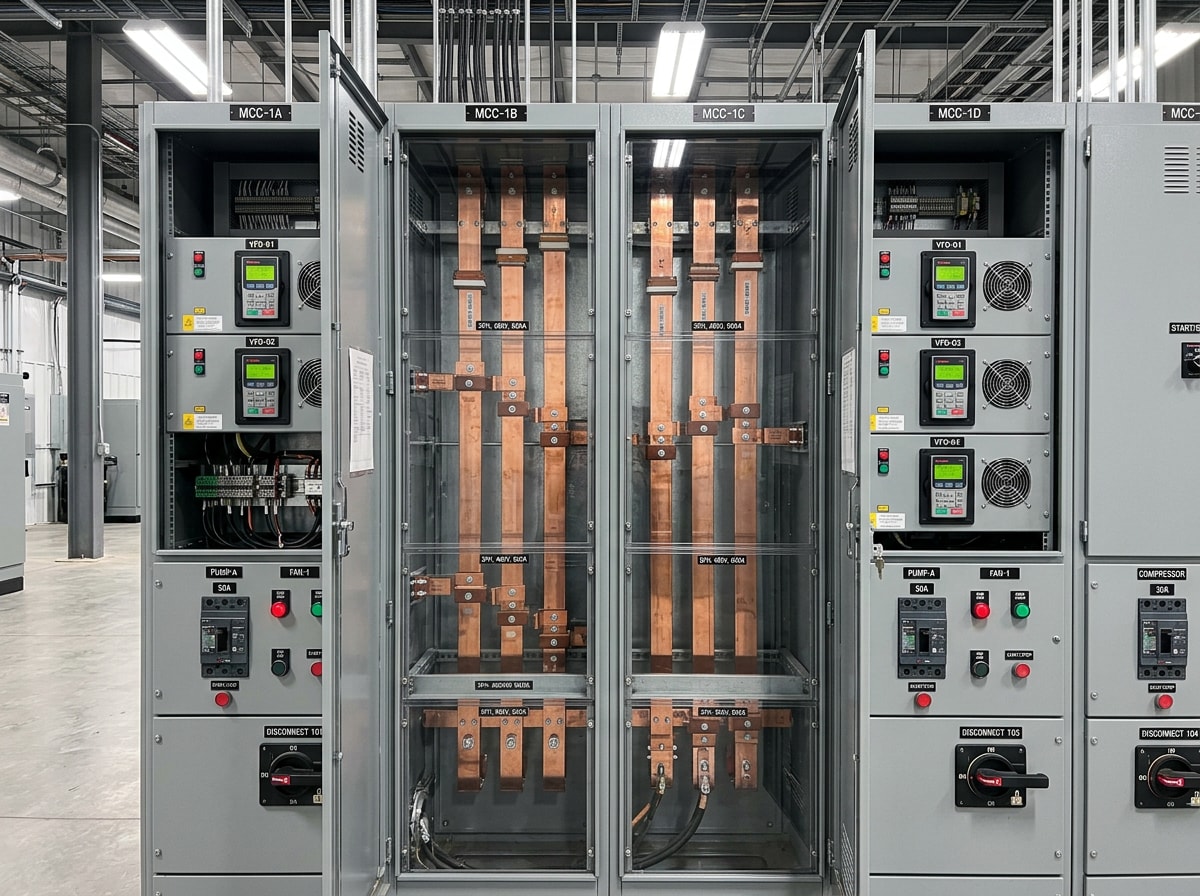
A motor control center is a centralized assembly of enclosed sections that start, stop, and protect every motor in a facility.
Each bucket holds a starter or VFD, overload devices, and a disconnect, so one motor can be isolated and serviced without shutting down the whole plant.
We install new MCCs, service existing lineups, and troubleshoot buckets that fault or drives that throw intermittent errors.
This is where the industrial and commercial trades genuinely split. Reading a protection scheme, tuning a drive, and verifying overload settings takes training a general commercial electrician usually has not had.
Industrial Panel and Service Upgrades
Most upgrades start with a trigger: a new production line, heavier equipment, gear past manufacturer support, or a panel with no spare capacity.
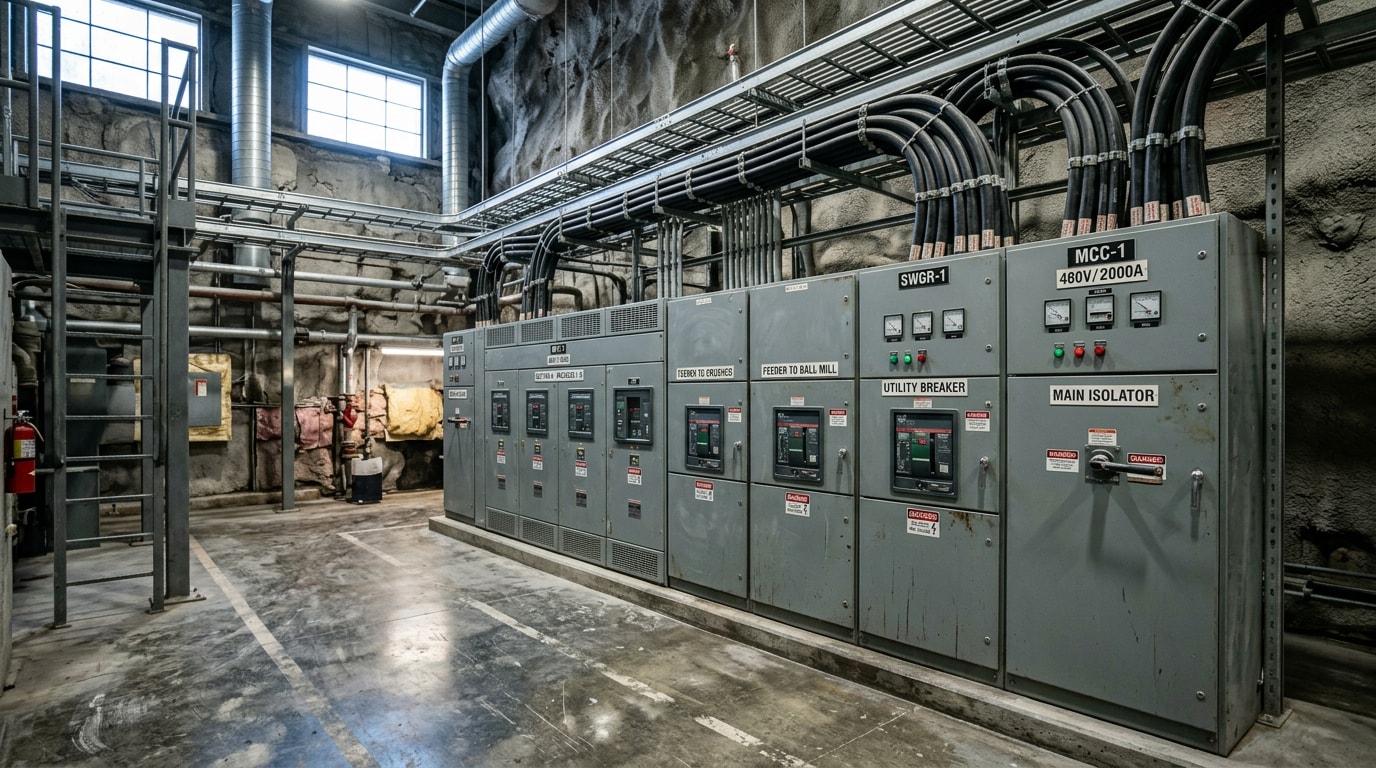
A service entrance upgrade at this scale often means stepping 480V three-phase service from the several-hundred-amp range into the low thousands, with new switchgear sized to the revised load.
Modifications at that level trigger permit and inspection obligations, plus fresh utility coordination. Our electrical service upgrades page covers how that sequence works on a live site.
Industrial Control Systems: PLCs and HMIs
PLC programming and HMI integration turn a collection of motors and valves into a system an operator can actually run.
We install new controllers, upgrade legacy logic, and tie in instrumentation for flow, level, pressure, and temperature so process control runs on live data.
The payoff is practical: automated controls cut constant manual monitoring, flatten energy spikes, and hold product quality consistent between shifts.
Generators and Temporary Power
A standby generator is less of a luxury here than it is on the Front Range.
Winter storms and long feeder runs make outages a scheduling reality. A properly configured transfer switch and grounding system decide whether your process rides through or shuts down hard. See backup generator wiring and installation for how that work is staged.
We also set up temporary power for construction staging, seasonal operations, and high-country sites without permanent service, along with routine generator service and load-bank testing.
Who Issues Electrical Permits in Gunnison County
This is the single most common misunderstanding we correct on first site visits.
Unincorporated Gunnison County does not run its own electrical inspection program. Permits are issued by the state, and inspections are conducted by a state electrical inspector. The county's own electrical permits page lists the assigned state inspector and contact number.
The City of Gunnison follows the same path. Its building code carries an exception stating that the State of Colorado provides electrical and plumbing inspection services until notice is given that the city will perform those services .
What that means for your project:
- Your building permit and your electrical permit come from two different authorities.
- The building permit for structural, mechanical, and energy scope comes from Gunnison County Community Development or the relevant municipality.
- The electrical permit is pulled through the
Colorado State Electrical Board, and it is valid for one year from the date it is issued .
An electrical contractor is required to obtain permits for the work done by the company , so a "we'll let you pull it" arrangement is a red flag.
Scheduling follows the state inspector's route, not a county queue. On a shutdown-driven project, that changes how you plan the cut-over window. Details and forms live on the Colorado State Electrical Board permit and inspection page.
One more current item worth tracking: Colorado has enforced the 2023 NEC since the State Electrical Board adopted it with an effective date of August 1, 2023 , and the Board scheduled a rulemaking hearing for May 27, 2026 on revisions to adopt the 2026 National Electrical Code . If your drawings were stamped under an older cycle, confirm the edition before plan review.
For projects that need stamped design work ahead of permitting, our guide to electrical engineering services in Gunnison County walks through the design-to-permit handoff.
Industrial vs. Commercial Electrical Work: What Actually Differs
An industrial system is defined less by building size than by load behavior.
| Factor | Commercial | Industrial |
|---|---|---|
| Typical loads | HVAC, lighting, office equipment | Continuous-duty motors, process equipment, production lines |
| Distribution | Lighter three-phase, lower service amperage | 480V three-phase, switchgear, sometimes medium voltage |
| Controls | Packaged equipment controls, BAS | MCCs, VFDs, PLCs, HMIs, instrumentation |
| Classified areas | Rare | Common at fuel, grain, chemical, and wastewater sites |
| Downtime cost | Inconvenient | Measured per hour against lost production |
That distinction is not academic. The occupancy classification on your permit drives which load-calculation method applies, how deep the inspection goes, and whether a contractor's experience matches the job.
Locally the split shows up at water and wastewater plants, food and beverage processing, gravel and aggregate operations, ski-area utility plants, and greenhouse facilities. If you need lighter-duty buildout instead, that scope belongs under commercial electrical construction.
High Altitude Changes the Equipment Spec
Here is the detail most out-of-area bidders miss, and the one that has sent more than one piece of gear back to the factory on our jobs.
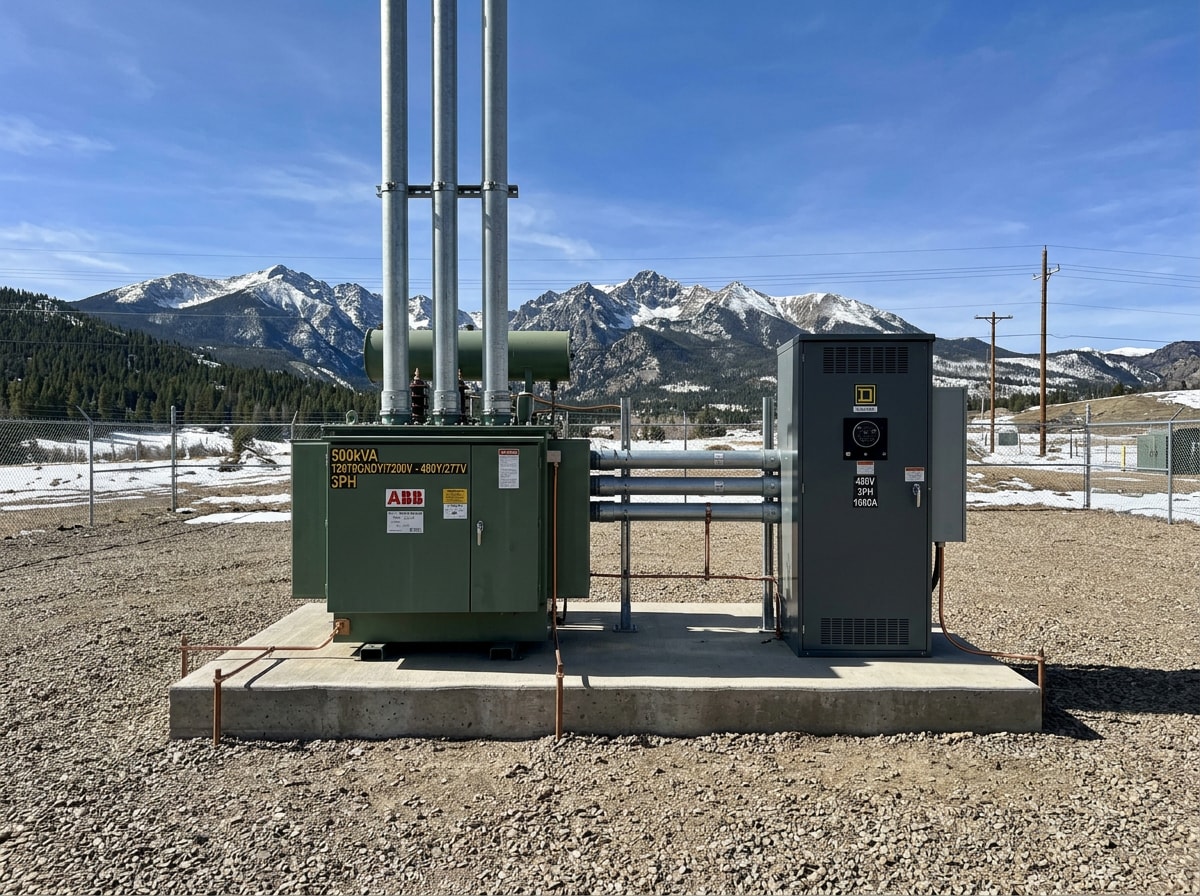
Equipment ratings assume a sea-level-to-1,000-meter envelope. Switchgear must be derated for altitudes above 3,300 feet or 1,000 meters, per ANSI tables that lower BIL, interrupting current, and continuous current ratings.
Most equipment insulation is built with enough margin only up to 1,000 m (3,300 ft).
Every populated site in this county sits well past that line. Using the common 1% per 100 m above 1,000 m rule of thumb for dielectric correction:
| Location | Approx. elevation | Meters above the 1,000 m baseline | Approx. dielectric correction |
|---|---|---|---|
| Gunnison | 7,700 ft | ~1,350 m | ~13% |
| Almont | 8,000 ft | ~1,440 m | ~14% |
| Lake City | 8,660 ft | ~1,640 m | ~16% |
| Crested Butte | 8,885 ft | ~1,710 m | ~17% |
| Mt. Crested Butte | 9,375 ft | ~1,860 m | ~19% |
Treat these as planning figures only. When general data disagrees with actual manufacturer data, always default to the manufacturer data , and note that current derating does not apply to interrupting ratings, since circuit breaker interrupting capacity is unaffected by altitude .
Practical consequence: transformers, enclosed gear, and motors often have to be specified a size up, and altitude belongs on the submittal, not in a field conversation after delivery.
Licensing: How to Vet an Industrial Electrical Contractor
Industrial installations must be performed or directly supervised by a Colorado master electrician, with journeyman electricians working under that supervision. The firm itself must hold an active electrical contractor registration with the State Electrical Board.
Do not take "licensed and insured" on faith. Ask for license numbers, verify them through the state's license lookup, and request a current certificate of insurance naming your facility.
Then ask about industrial hours specifically. Colorado's journeyman path requires 8,000 hours earned over no less than four years, with a minimum of 4,000 hours earned in no less than two years being commercial and/or industrial work . A crew can be fully licensed and still have spent nearly all of those hours on residential service. Ask which half of the ledger their hours came from.
Three more questions that separate bidders quickly:
- Who on your crew has run an MCC lineup and can produce a coordination study?
- Have you specified gear for altitude derating on a Colorado mountain site before?
- Who pulls the electrical permit, and have you worked with the state inspector covering this county?
Preventative Maintenance and NFPA 70E Safety
Scheduled maintenance is the cheapest hour you will buy.
Most industrial facilities land on a six- to twelve-month inspection interval depending on duty cycle and environment. That interval covers diagnostic testing, infrared thermography on connections and buckets, load studies, and protection coordination across switchgear, breakers, feeders, and grounding. Our electrical inspection and troubleshooting service covers that scope.
Preventative maintenance and emergency response exist for the same reason: downtime costs far more per hour than the repair does.
Before anyone touches energized gear, ask about NFPA 70E and 70B training, and ask for an arc flash study before new or modified switchgear is energized. NFPA 70E provides requirements and guidelines for reducing risks from electric shock, arc flash, and arc blast, including risk assessments and PPE selection. The NFPA 70E overview is a reasonable baseline for what your own site program should require of contractors.
Hazardous Location Classifications
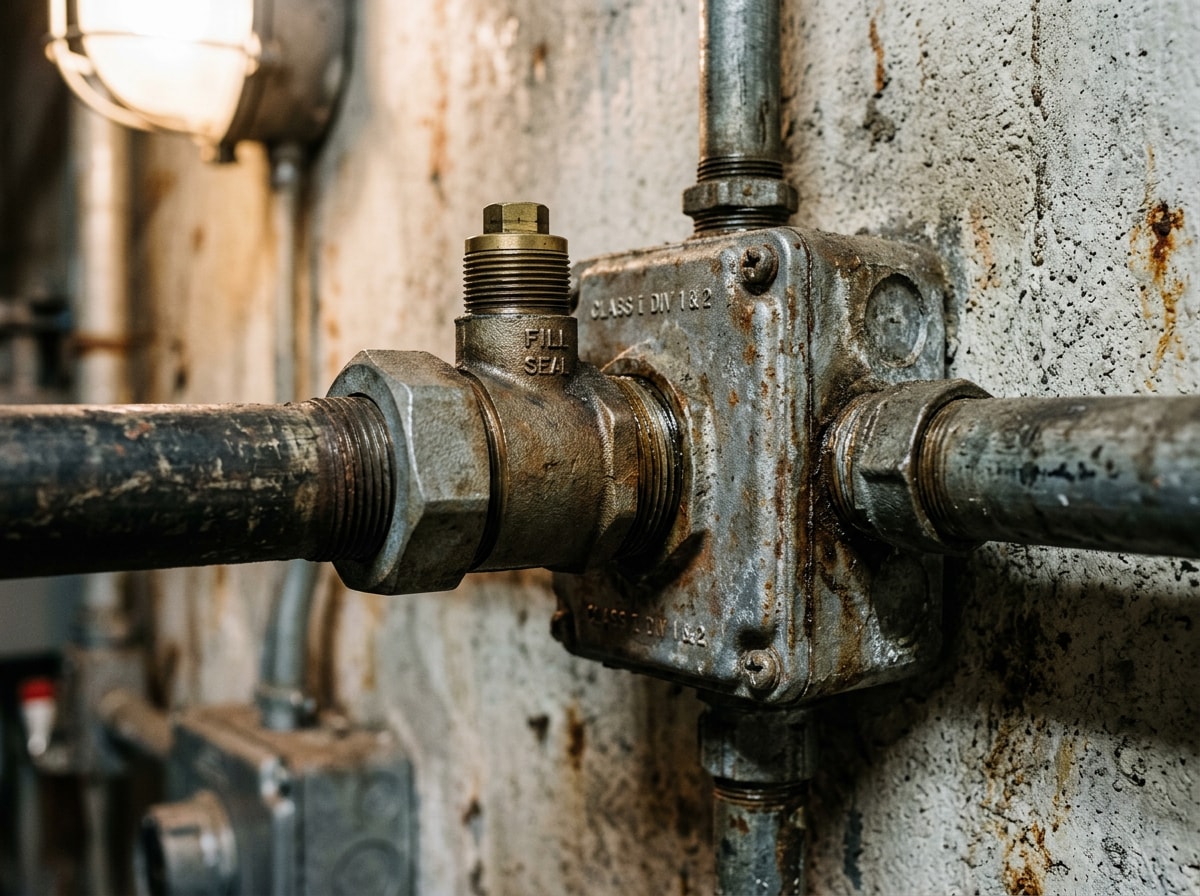
Areas containing flammable gases or vapors, combustible dust, or ignitable fibers are classified by Class and Division under NEC Article 500 and following. Locally that means grain and food processing, fuel storage, chemical handling, and wastewater headworks.
Classification is a cost driver, not paperwork. A Class I Division 2 area dictates equipment ratings, seal fittings, conduit and wiring methods, and often explosion-proof enclosures.
Federal rules apply on top of the code. OSHA 1910.307 covers electric equipment and wiring in classified locations, and each room, section, or area must be considered individually in determining its classification .
Settle classification during design. Discovering it at inspection means re-buying fittings and re-pulling conductors.
Facilities and Areas We Serve
We work across Gunnison, Crested Butte, Mt. Crested Butte, Almont, and the surrounding valley on warehouses and distribution buildings, processing and production facilities, resort plant equipment, multi-unit properties, agricultural and irrigation operations, and municipal water and wastewater systems.
Most jobs reach us through general contractors, developers, facility managers, and property managers.
Service cut-overs add a constraint that flatland projects do not have. Coordinating a shutdown window with the local cooperative, in a season when the site is reachable, often sets the entire project schedule.
Coverage details are on our Gunnison County service area page, with neighboring Lake City work handled by the same crews. You can also browse the full electrician service list or start at our homepage.
Ready to scope a project? Get a free estimate and we will walk the site first.
FAQ
Who issues electrical permits in Gunnison County, CO?
The State of Colorado does. Gunnison County does not issue electrical permits or perform electrical inspections; permits are issued by the state and inspections are conducted by a state electrical inspector. Your building permit still comes from the county or municipality.
What does an industrial electrician do?
An industrial electrician installs, maintains, and repairs the electrical infrastructure inside plants and processing facilities. That includes motor control centers, VFDs, PLCs, switchgear, and distribution. The measure of the work is uptime: keeping equipment running safely without unplanned stoppages.
Do industrial electricians need more training than commercial electricians?
They follow the same Colorado licensing path, but the experience mix differs. Colorado requires journeyman applicants to document 8,000 hours over at least four years, with at least 4,000 of those hours in commercial and/or industrial work. Industrial crews add arc-flash, drive, and control-platform training on top of that.
Does equipment really need to be derated for altitude here?
Yes. Switchgear must be derated for altitudes above 3,300 feet or 1,000 meters , and every town in the county sits thousands of feet above that threshold. Put the site elevation on your submittals so the factory applies the correct ratings.
Which code edition applies to my project?
Colorado has enforced the 2023 NEC since the State Electrical Board adopted it effective August 1, 2023 , and the Board scheduled a May 27, 2026 hearing on adopting the 2026 NEC . Confirm the edition in force at the time your permit is filed.
How long is an electrical permit good for?
State electrical permits are valid for one year from the date the permit is issued. On phased industrial projects, plan inspections so the permit does not lapse between rough-in and final.
Do you offer ongoing maintenance after a project is complete?
Yes. Ongoing maintenance runs through a service agreement covering scheduled inspections, thermography, diagnostic testing, and generator service, so the system stays reliable long after final inspection.
How do I get a quote for industrial electrical work?
Send drawings or a scope description and we will schedule a site walk. Pricing depends on service size, controls scope, classified areas, and utility coordination, so a walk beats a phone estimate every time. Contact us to start.
Lake Fork Electric is a licensed Colorado electrical contractor serving Gunnison County and the surrounding Western Slope. Questions about a specific plant or a permit already in process can go straight through our contact page.