Most people searching for electrical engineering services in Gunnison County, CO need one of two things: a licensed electrical contractor who can design and install the system, or a stamped drawing set that a plan reviewer will accept. This guide separates the two, walks through the work valley property owners actually book, and covers the permit rule that catches nearly every newcomer here.
Engineering Stamp or Licensed Contractor: Which One Do You Need?
The phrase "electrical engineering services" gets used two ways locally, and picking the wrong one costs weeks.
- A licensed electrical contractor designs the circuits, runs the load calculation, sizes the service, pulls the permit, installs the work and meets the inspector. This covers the overwhelming majority of homes, short-term rentals, shops and small commercial buildings.
- A professional engineer (PE) stamps drawings. You need a stamp when a plan reviewer, lender, utility or insurer demands sealed calculations, typically on larger commercial builds, fire-alarm or life-safety systems, and some multifamily or municipal projects.
Ask the plan reviewer one question before hiring anyone: does this project require sealed electrical drawings, or will a permit-ready drawing set from a registered contractor do? If it is the latter, our breakdown of permit-ready electrical drawing sets explains what those packets contain.
Everything below assumes contractor-side work: design, installation, service and inspection by Colorado-licensed electricians.
The Services Gunnison County Property Owners Book Most
Calls in this valley fall into a short list. Something stopped working, the wiring predates the load it carries, a remodel changed the plan, or the last outage made backup power feel urgent.
Troubleshooting and Repair
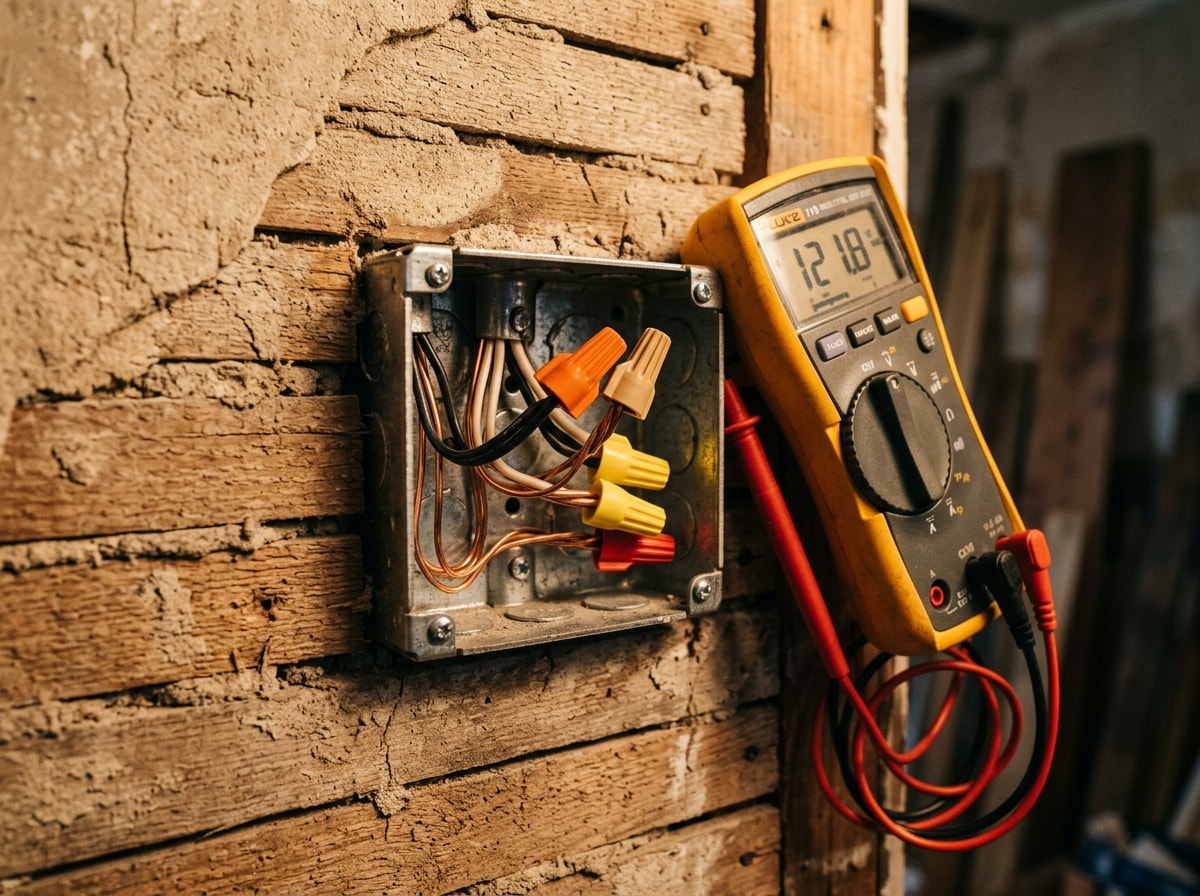
Good troubleshooting is a process of elimination. The tech isolates the circuit, tests under load, and traces the fault to its source before replacing anything.
Symptom-swapping wastes money. In older valley homes our crews see the same three failure points over and over: backstabbed receptacles, loose neutrals in daisy-chained boxes, and outdoor boxes that fill with meltwater every spring.
Book electrical inspection and troubleshooting when a breaker trips with no obvious cause, lights flicker across multiple rooms, or a receptacle feels warm.
Rewiring, Knob and Tube, and Aluminum Branch Circuits
Older Gunnison and Crested Butte housing stock still hides knob and tube wiring. It has no equipment ground and does not tolerate modern loads or contact with blown-in insulation.
Aluminum branch wiring from the late 1960s and 1970s is the other one. It needs listed connectors, proper pigtailing or device replacement, not a wire nut and hope.
Three things usually trigger a rewire:
- An insurer or lender flags the wiring during underwriting.
- A remodel opens the walls anyway, so electrical remodeling makes the upgrade cheap by comparison.
- The panel simply cannot support what the household now plugs in.
Panel and Service Upgrades
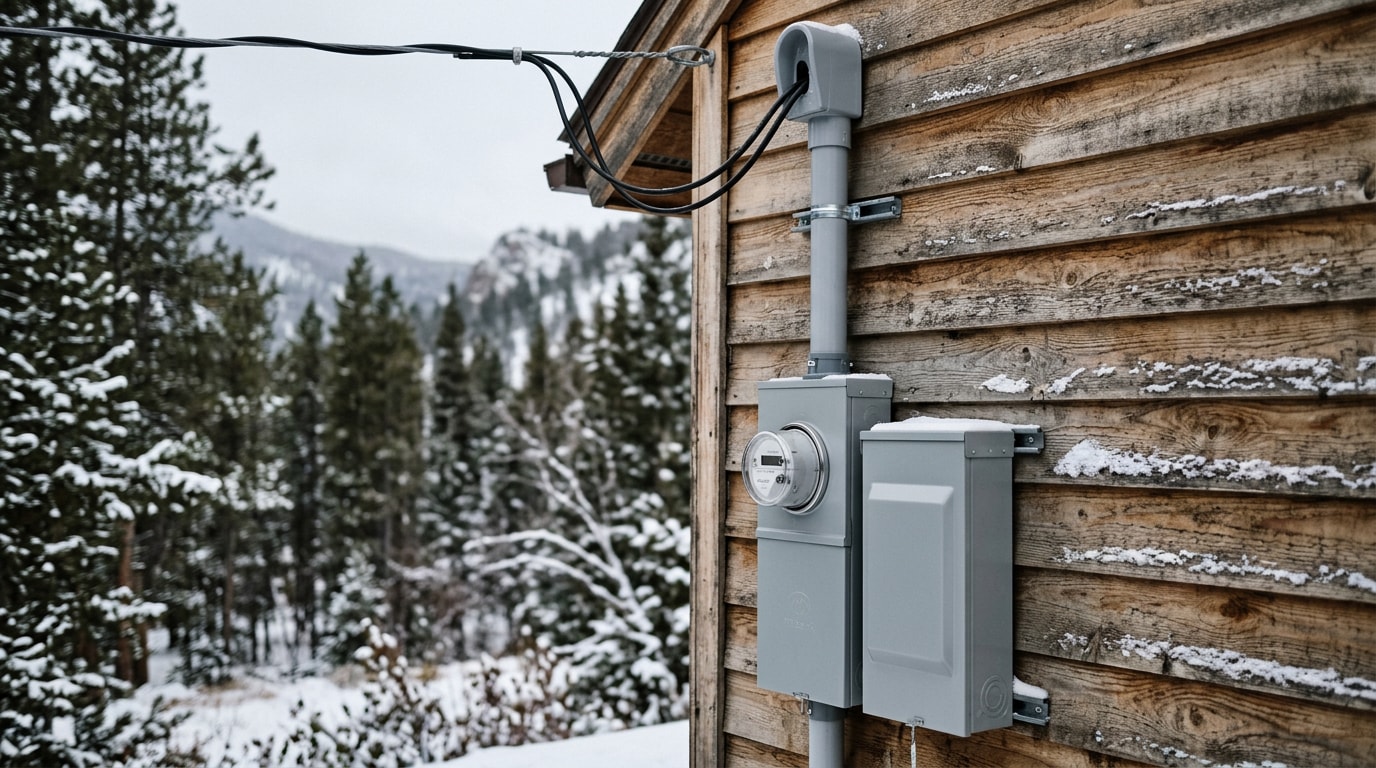
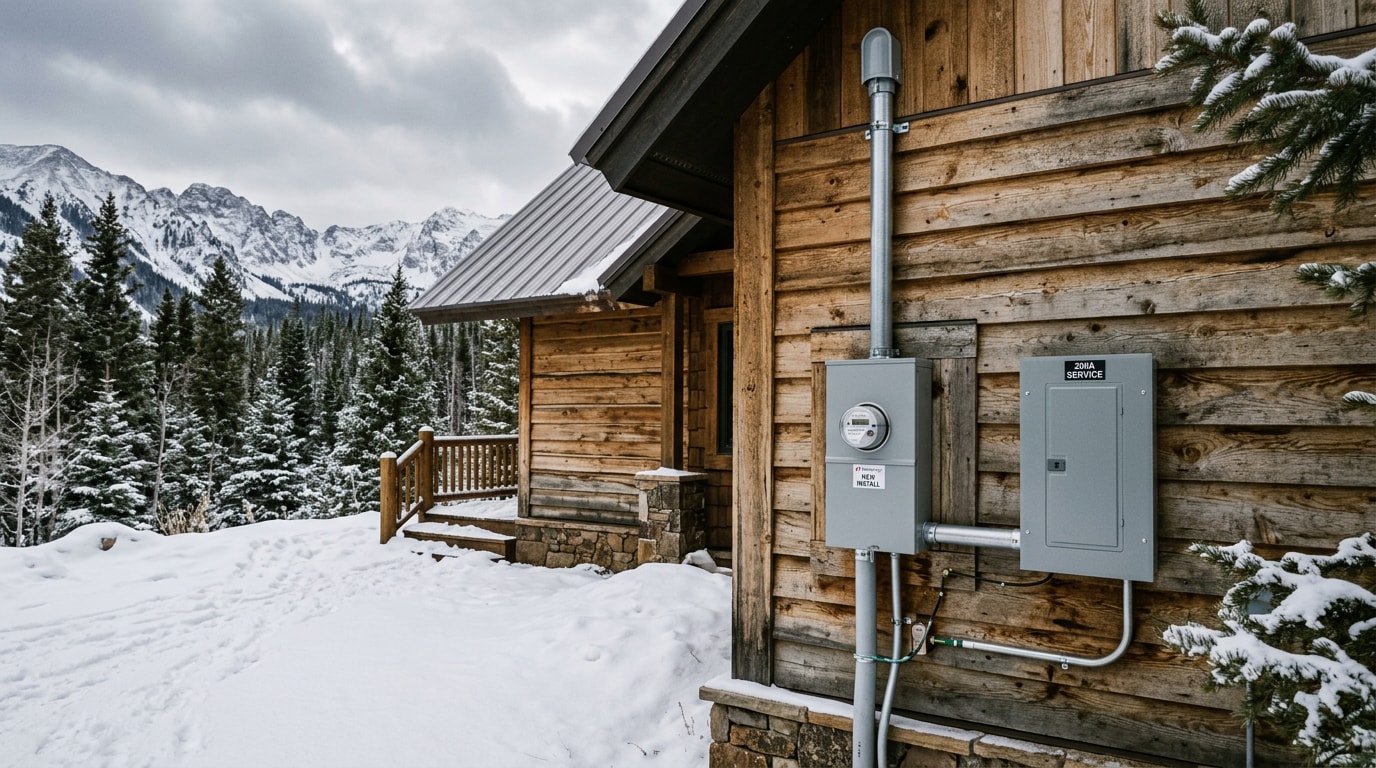
A service upgrade replaces the meter base, service conductors and panel to raise available capacity, commonly to 200 amps. It is not just a bigger box. Grounding and bonding get brought current at the same time, and a subpanel may be added for a shop, garage or ADU.
The triggers are almost always new load: heat pumps, hot tubs, EV chargers, accessory dwelling units and short-term-rental appliance packages stacking onto a 100-amp service.
See electrical service upgrades for scope, or hot tub and pool equipment wiring if the spa is what pushed you over the limit.
EV Charging
Level 1 charging uses an existing 120-volt outlet and adds only a few miles of range per hour. A Level 2 charger runs on a 240-volt dedicated circuit, typically 40 to 60 amps, and recovers a normal day of driving overnight.
Whether the panel needs upgrading first comes down to a load calculation: existing demand plus the new charger against your service rating. If there is no room, the panel goes first.
Two local constraints show up constantly. Detached garages need a trenched or overhead feeder, and exterior mounts must clear roof snow shed. Cold-rated, outdoor-listed equipment is not optional at these elevations. Electric vehicle charging station installation covers the process end to end.
Backup Power
Outages hit harder in mountain communities. A lost well pump or boiler becomes a frozen-pipe problem within hours.
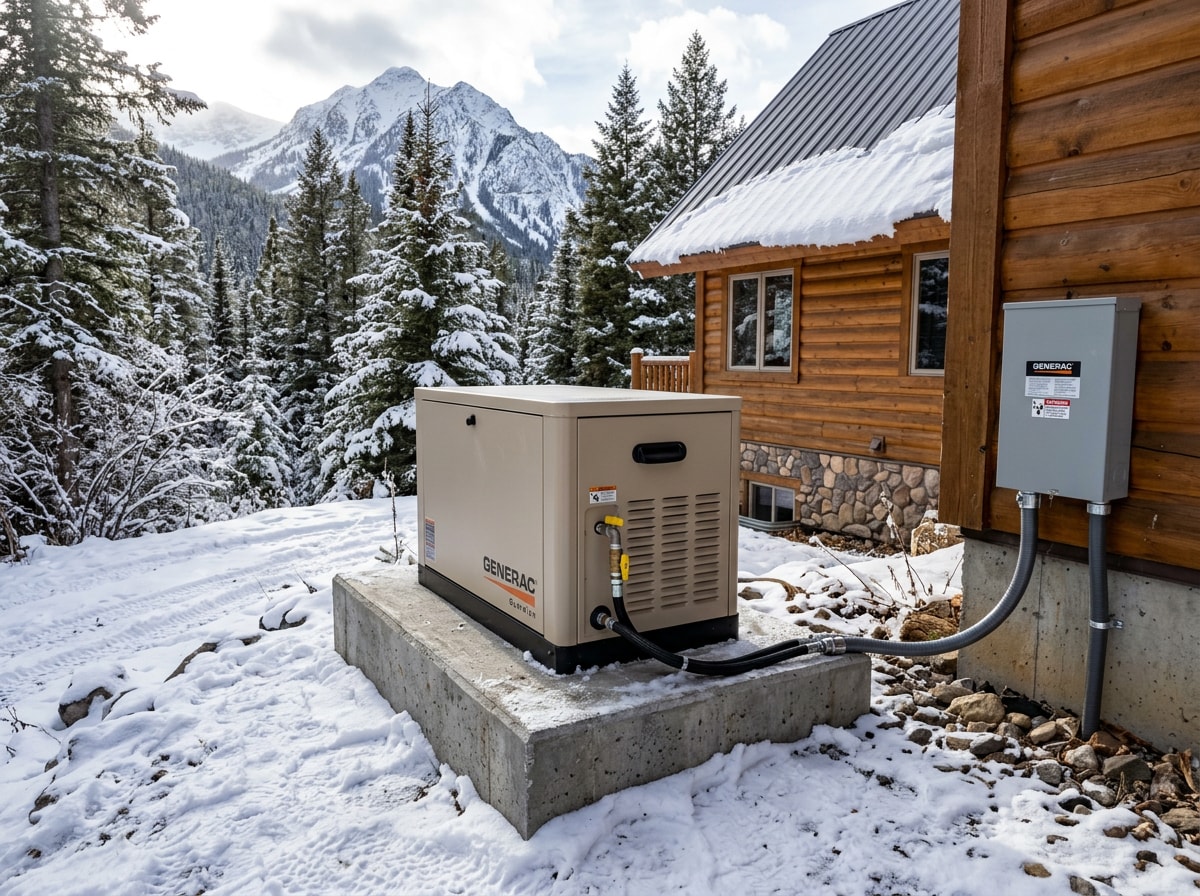
A properly installed standby system includes a load calculation, a transfer switch so the unit can never backfeed the utility line, and a pad sited for snow depth and fuel access. Portable units are a different animal: the CPSC advises running them outdoors only, at least 20 feet from the house with exhaust directed away.
Start with backup generator wiring and installation, and pair it with surge protection installation if your feed sees repeated blinks.
Lighting and Controls
An LED retrofit is the cheapest comfort improvement available here. Recessed cans, dimming controls, under-cabinet runs and exterior entry lighting usually happen in one visit.
Two details decide whether you like the result. Fixture-to-dimmer compatibility prevents flicker and buzz. Color temperature matters more than people expect, and warmer output near 2700K reads far better across a long valley winter than cool white.
Browse lighting upgrades and replacement, custom lighting design or smart lighting installation.
Altitude Changes the Design Math
Here is the part most national guides skip. Engines lose output as air thins, and generator sizing at 8,000 feet is not the sizing you would use in Denver, let alone at sea level.
The common industry rule of thumb is roughly 3% to 3.5% power loss per 1,000 feet of elevation for naturally aspirated engines. Applied to a 22 kW nameplate standby unit at 3% per 1,000 feet, the picture looks like this.
| Community | Approx. elevation | Estimated derate | Usable output, 22 kW nameplate |
|---|---|---|---|
| Gunnison | ~7,700 ft | ~23% | ~17 kW |
| Almont | ~8,000 ft | ~24% | ~16.7 kW |
| Crested Butte | ~8,900 ft | ~27% | ~16 kW |
| Pitkin | ~9,200 ft | ~28% | ~15.9 kW |
| Mt. Crested Butte | ~9,400 ft | ~28% | ~15.8 kW |
Treat those numbers as planning estimates, not specifications. Every manufacturer publishes a derate curve for the specific engine, and that curve is what belongs in the submittal.
The practical takeaway: a unit sized to your essential loads at sea level can fall short of heat, well pump and refrigeration here. Cold-weather kits, battery warmers and propane vaporization capacity in deep winter deserve the same attention.
Solar arrays face the same climate math from a different angle. Snow shedding, mounting standoffs and conductor routing all change at elevation, which is why solar system design and solar wiring and electrical integration are worth scoping before panels get ordered.
Want the sizing run against your actual loads and elevation? Get a free estimate and we will do the calculation before anyone quotes hardware.
Commercial Electrical Work in the Valley
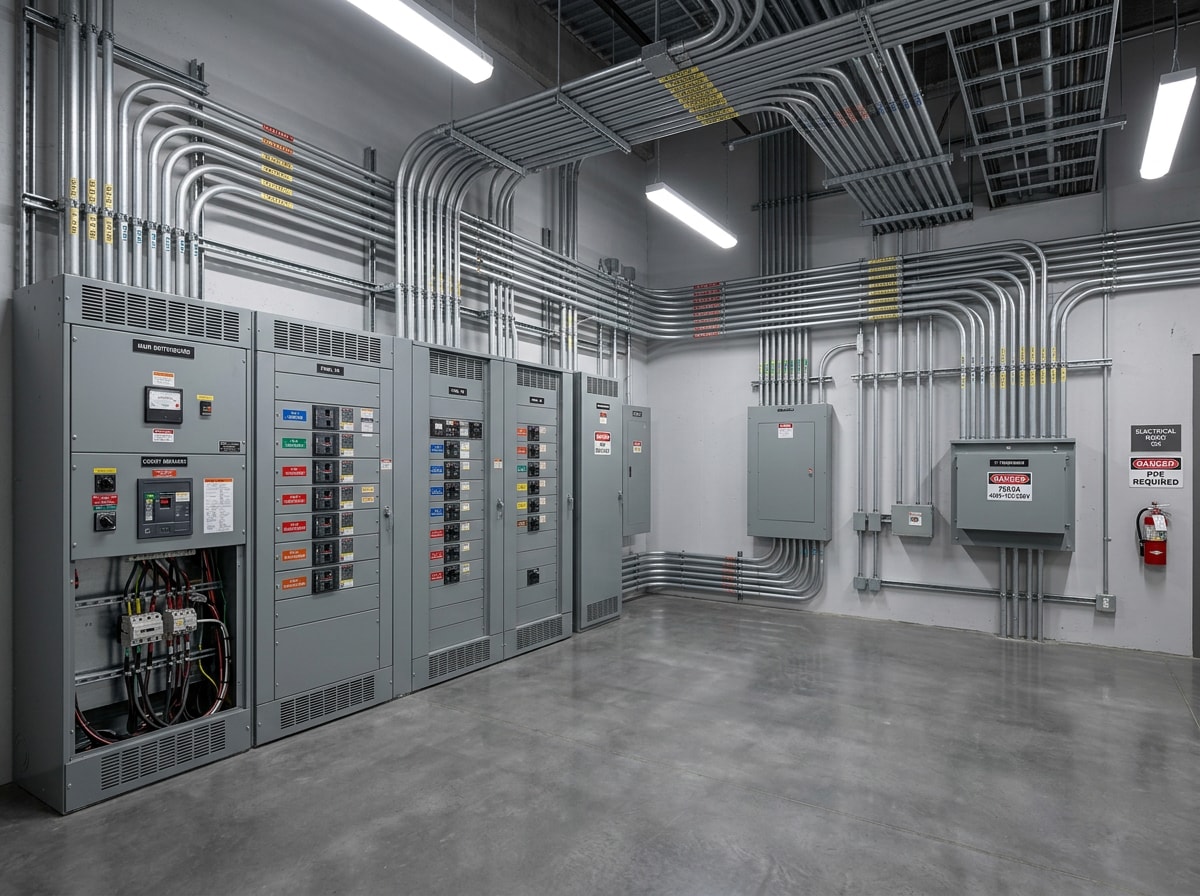
Commercial scope runs from switchgear and transformer replacement to new feeders, distribution, power circuits and tenant metering. Parking lot lighting, low-voltage cabling and tenant finish work round it out.
The local mix is lodging, short-term rentals, restaurants, retail, ranch operations and municipal facilities. That mix dictates scheduling more than anything technical. Shutdowns get planned around shoulder season whenever the building can tolerate it.
For ground-up projects, see commercial electrical construction and commercial lighting installation. Residential builders can start at new residential electrical construction.
Permits and Inspections: The Gunnison County Quirk
This is the jurisdictional detail that surprises people moving in from Front Range counties.
Gunnison County does not issue electrical permits or perform electrical inspections. Permits are issued by the state, and inspections are conducted by a state electrical inspector.
That means your paperwork goes through the Colorado State Electrical Board rather than the county building department. A few rules worth knowing:
- A valid state electrical permit must be obtained before wiring is installed, and permits are valid for one year from issue.
- The electrical contractor is required to obtain the permit for work their company performs. Work must not be done on a homeowner-issued permit or a permit issued to another company.
- A homeowner may wire their own residence only if they personally perform the work and the property is not for sale, resale or rent and is not generally open to the public.
- Work must be inspected before it is covered by insulation or drywall, and again at completion before permanent power release.
Details and the online permit system live on the Colorado State Electrical Board permits and inspections page. Colorado enforces the National Electrical Code statewide and the board updates the adopted edition on a rolling cycle, so confirm the current enforceable edition before design work starts.
City limits are a separate question. If your address sits inside an incorporated municipality, verify with that town's building department whether any local review applies on top of the state electrical permit.
Winter, Mud Season, and Realistic Scheduling
Interior work is largely unaffected by weather. Exterior work is another story.
Generator pads, service masts, trenching and exterior lighting all slip with frozen ground, snow load and driveway access. Mud season creates its own access problems on county roads.
The fix is simple: book exterior and trenching work for the summer window, and schedule panel or service changes for the shoulder seasons when a planned outage is least disruptive.
Areas We Serve
Coverage spans Gunnison County, including Gunnison, Crested Butte, Mt. Crested Butte, Almont, Parlin and Pitkin, plus surrounding Western and Central Colorado communities.
Nearby service areas include Lake City, Salida, Buena Vista and Monte Vista.
Outlying addresses may need a scheduled window rather than a same-day slot, especially in winter. See the full electrician service list or visit the Lake Fork Electric homepage for everything we cover.
FAQ
Do I need an electrical engineer or an electrician in Gunnison County?
For homes, remodels, panels, generators, EV chargers and most small commercial work, a licensed electrical contractor is who you need. A stamped engineering drawing is required only when a plan reviewer, utility, lender or insurer specifically asks for sealed calculations, typically on larger commercial and life-safety projects.
Who issues electrical permits in Gunnison County?
The State of Colorado. The county does not issue electrical permits or perform electrical inspections, so permits come through the Colorado State Electrical Board and a state electrical inspector handles the inspection.
Do I need a permit for electrical work in Colorado?
Yes for new wiring, added circuits, panel and service work, EV chargers and generators. Like-for-like fixture swaps on an existing circuit are the usual exemption. Unpermitted work creates insurance and resale problems later.
Can a homeowner do their own electrical work in Colorado?
Yes, with conditions. The homeowner must obtain the permit before starting, must personally perform the work, and the property cannot be for sale, resale, rent or generally open to the public. All work must be inspected before it is covered.
Does an EV charger installation require an electrical permit?
Yes. Your licensed electrician pulls the permit and schedules the inspection. That inspection verifies circuit sizing, breaker rating and the load calculation behind the Level 2 charger, which are the details most likely to go wrong on a DIY install.
What size generator do I need at 8,000 feet?
Larger than the sea-level answer. Expect roughly 3% to 3.5% output loss per 1,000 feet of elevation on naturally aspirated engines, then size against your essential loads: heat, well pump, refrigeration and a few circuits. Always check the manufacturer's derate curve for the specific model.
How do I verify an electrician's license in Colorado?
Use the state's license verification tool through the Division of Professions and Occupations. Confirm the contractor registration is active, not just an individual journeyman license, because contractor registration is what allows a company to pull permits.
How far ahead should I book winter electrical work?
Interior work can usually be scheduled normally. For trenching, generator pads, service masts and exterior lighting, plan several weeks ahead and expect a seasonal window. Contact us with your target dates and we will tell you honestly what is realistic.
Written by the Colorado-licensed electricians at Lake Fork Electric, who design, install, permit and inspect electrical systems across Gunnison County year round. Questions about a specific property? Reach the team through our contact page.