An electrical work estimate in Cotopaxi, CO prices out differently than the same job in Colorado Springs, because drive time, long rural service runs, and state inspection rules all land inside the bid. Below are 2026 hourly bands, per project ranges, Colorado permit rules, and the questions that force a vague quote into a written scope. Start with the line item homeowners misread most often: the service call fee.
How Much Does an Electrician Cost in Cotopaxi, CO? [2026 Ranges]
Most residential electrical jobs land between $170 and $600 total, with hourly labor commonly running $50 to $130 per hour and a first hour or service call fee of roughly $75 to $200. Panels, rewires, and service upgrades run into the low thousands.
Quick view on 2026 pricing:
- Small task (outlet, switch, fixture swap): about $120 to $300
- Typical service call with repair: about $170 to $600
- Hourly labor: about $50 to $130, depending on license level and market
- Panel or service work: about $1,300 to $4,500
Treat these as reference points, not a bid.
Published cost guides disagree with each other by wide margins because they average very different project types across very different markets. The only number that means anything is a written, on site estimate for your address.
One useful anchor behind all of it: the U.S. Bureau of Labor Statistics put the median annual wage for electricians at $63,190 as of May 2025, with the top 10 percent above $108,510. That spread is a large part of why two bids for the same job are not the same price. See the BLS wage data for electricians for the full breakdown.
Start with the electrical services we handle to see where your job fits.
What Drives the Hourly Rate
Nearly every estimate is built from an hourly rate or a first hour rate, then adjusted. Four things move that base number: who is doing the work, the trip charge to reach you, when you call, and where you live.
Hourly Rates by License Level
Rates track license level:
| License level | Typical hourly range | Can sign off on permitted work |
|---|---|---|
| Apprentice | $40 to $65 | No, works under supervision |
| Journeyman | $60 to $100 | Yes, within license scope |
| Master | $90 to $150 | Yes, including contractor oversight |
The cheapest tier is not automatically the cheapest outcome.
Apprentices cannot sign off on permitted work, so an apprentice only crew still needs a licensed journeyperson or master on anything panel adjacent. A master who pulls and closes a permit correctly the first time usually beats a low hourly rate that ends in a failed inspection and a return trip.
Service Call Fee and Minimum Charge
A service call fee, also called a trip charge or first hour rate, covers travel, insurance, truck stock, and the first hour on site. Expect roughly $75 to $200. In most cases it rolls into the job total rather than being billed on top of labor.
This is the line that confuses people. On a 20 minute repair, the minimum charge is the bulk of the invoice, not the labor.
Ask upfront whether the fee applies toward the work if you approve it that day. Many shops credit it.
Emergency and After Hours Rates
Nights, weekends, and holidays carry a premium in one of two formats: a flat surcharge of roughly $100 to $300, or a multiplied hourly rate at 1.5x to 2x standard.
Before you approve a truck roll, ask three things:
- What time do after hours rates start?
- Does the premium apply to the whole visit or only the first hour?
- What does it cost if the fix has to be finished the next day?
Why Cotopaxi Pricing Does Not Match National Averages
National averages are built from metro markets, and that is exactly why they mislead people here.
Cotopaxi sits in unincorporated Fremont County along the Arkansas River corridor. Most crews serving it base out of Cañon City, Salida, or Westcliffe, which in our own scheduling usually means 25 to 45 minutes of windshield time each way before anyone touches a wire.
Supply houses sit at the same distance. A missing connector is a two hour round trip, not a ten minute run, which is why a well stocked truck matters more here than it does on the Front Range.
Local work also skews toward long service runs to detached shops and barns, well and septic pump circuits, seasonal cabins with decades of piecemeal wiring, and off grid or partially off grid systems.
Check the areas we serve around Cotopaxi to confirm whether travel is already baked into your quote.
Electrical Work Cost by Project
Hourly math only goes so far. Most homeowners want a number for the actual job.
| Project | Typical range | Main cost driver |
|---|---|---|
| Breaker box replacement | $1,300 to $2,500 | Panel size, breaker count, access |
| 200 amp service upgrade | $2,000 to $4,500 | Meter base, mast, utility coordination |
| New construction rough in | $3 to $6 per sq ft | Circuit count and layout |
| Rewiring an existing home | $5 to $10 per sq ft | Finished walls, insulation, crawlspace access |
| Outlet or switch replacement | $75 to $200 | Device type and location |
| New outlet where no circuit exists | $150 to $350 | Run length, wall finish |
| Fixture or ceiling fan install | $100 to $350 | Bracing, ceiling height |
| Diagnostic safety inspection | $150 to $400 | Home size, system access |
Panel Replacement and Service Upgrade
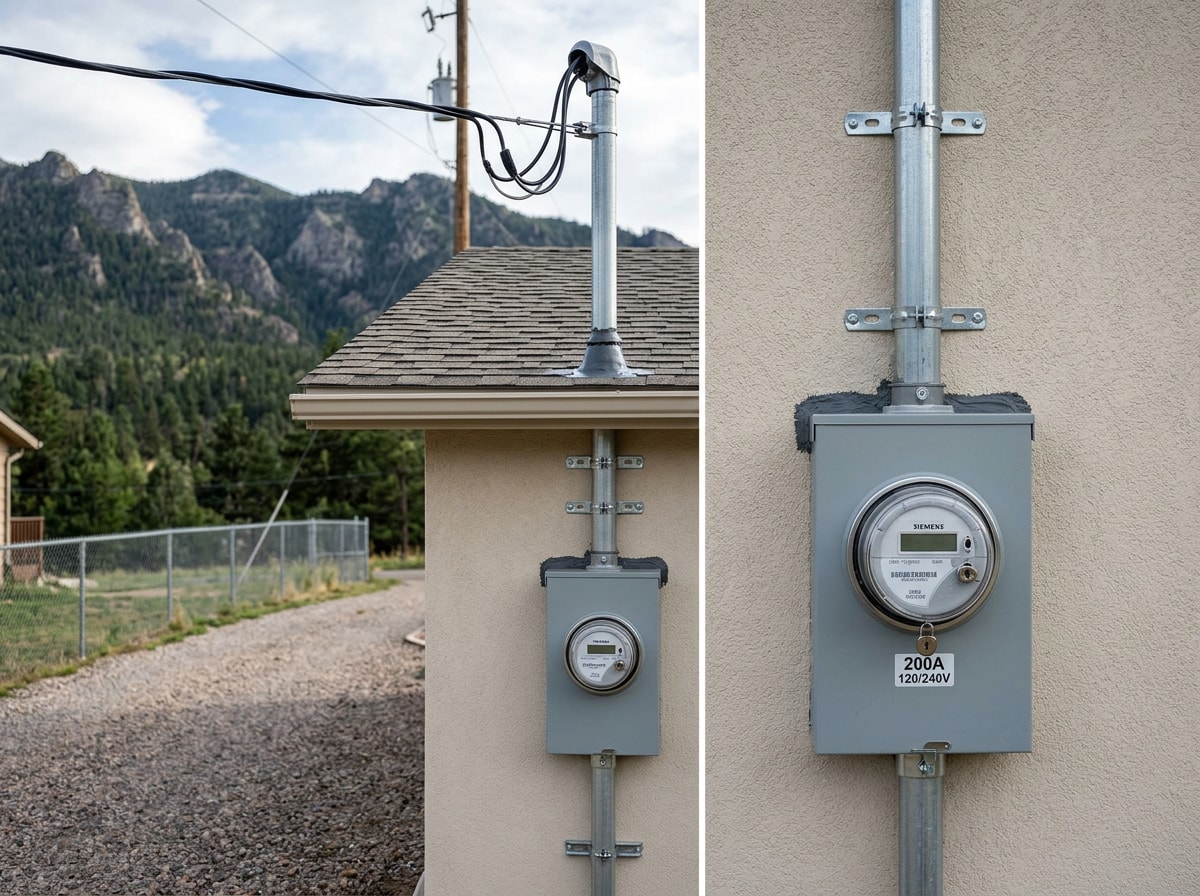
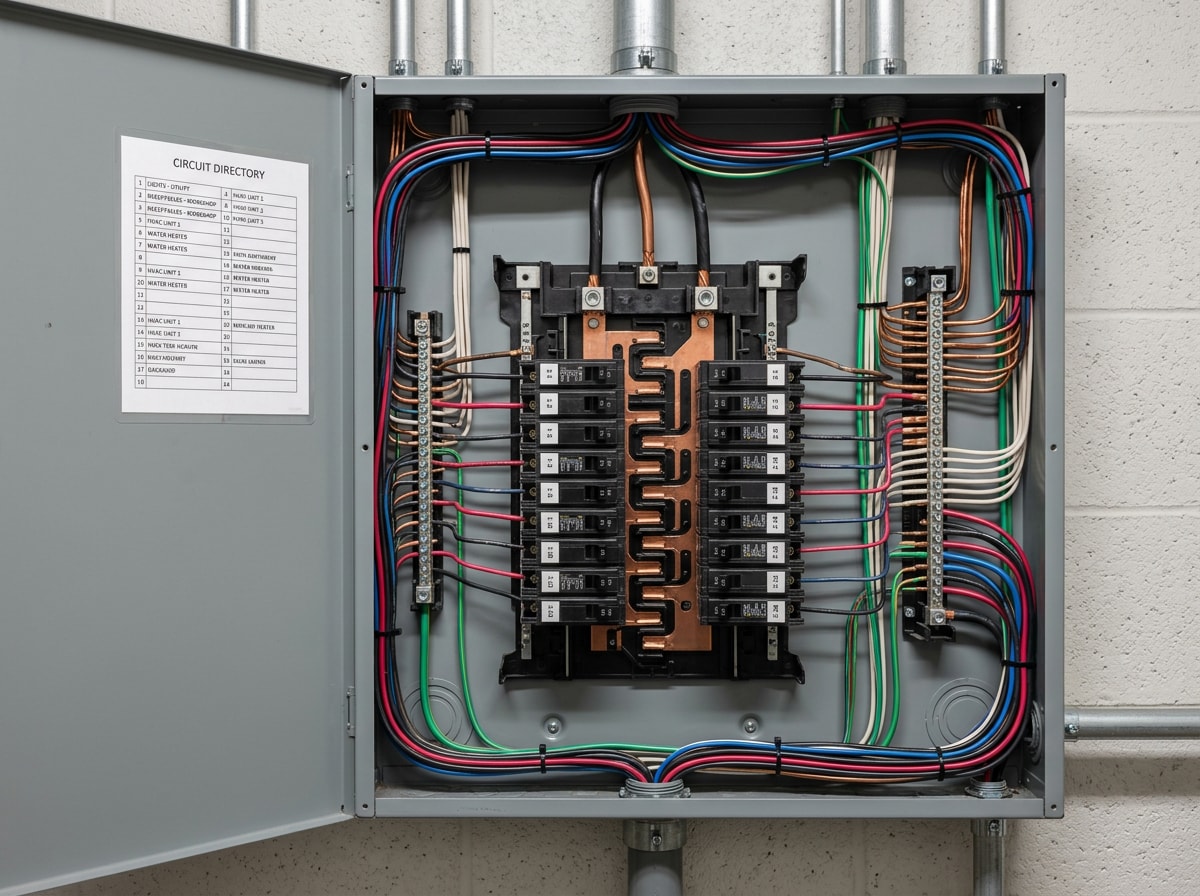
Amperage is the first thing flagged during a walkthrough. Older 60 amp and 100 amp services get maxed out fast by a heat pump, hot tub, well pump, or EV charger.
If the meter base is corroded or the mast is pulling away from the wall, a simple panel swap becomes a full electrical service upgrade. That is usually where the price jumps, and it is worth asking about before you compare bids.
For a walkthrough of what actually gets replaced during one of these jobs, see our breakdown of an electrical service change in Lake City, CO.
Wiring and Rewiring
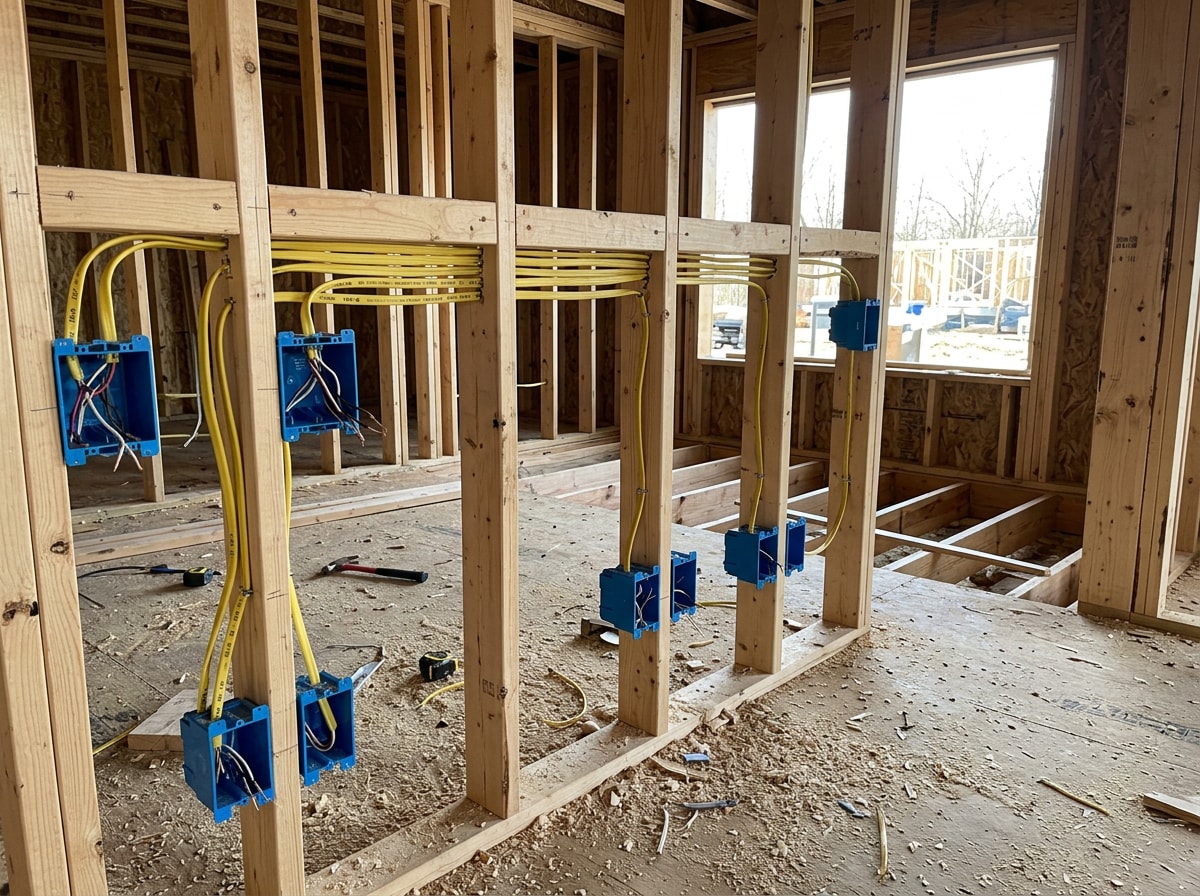
Rewiring costs more than new construction because the labor is not the wire. It is reaching the wire through finished walls, blown insulation, and tight crawlspaces.
On older cabins and ranch houses around Cotopaxi, an estimator is specifically looking for:
- Knob and tube runs
- Aluminum branch circuits
- Ungrounded two prong receptacles
- Cloth insulated conductors
- Prior work done without a permit
Any of those can expand scope quickly. Aluminum branch wiring in particular may need approved connectors or pigtailing at every device, which adds hours without adding a single new circuit.
Planning a remodel instead of a full rewire? Electrical remodeling and new residential construction price on different scopes, so ask which one your project falls under.
Outlets, Switches, and Fixtures
Replacing an existing device is cheap. Adding one where no circuit exists is the expensive version.
Batch them. Six small tasks on one visit share a single service call fee. Six separate visits do not.
Walk the house, make one list, and hand it over before the truck is scheduled.
Inspections and Diagnostics
A contractor's diagnostic or safety inspection is a different thing from a jurisdictional permit inspection, which is performed by the authority having jurisdiction and priced through the permit.
Common triggers for a paid electrical inspection and troubleshooting visit: a pending home sale, an insurance carrier request, a home older than about 40 years, or pre purchase due diligence.
A compliance check before closing is far cheaper than discovering a recalled panel brand afterward.
Permits and Code Compliance in Colorado
Permit fees and inspection time belong in the estimate as a real line item. An estimate with no permit allowance on permit triggering work is not a bargain. It is a bid that assumes nobody will look.
What the state rules actually say:
- A valid Colorado state electrical permit must be obtained before wiring is installed.
- Permits are valid for one year from the date of issue.
- The National Electrical Code is the adopted standard statewide, and the State Electrical Board updates the adopted edition on a cycle, so confirm which edition applies to your job.
- A homeowner may wire their own residence, but only if the property is not for sale, resale, or rent, the work is personally performed by the homeowner, and it is inspected before cover and again before permanent power.
- Electrical contractors must pull permits under their own company, not under a homeowner permit.
One rural detail that catches people: the State Electrical Board does not inspect inside jurisdictions that run their own electrical inspection program. Confirm which authority covers your parcel before anyone schedules an inspection.
The Colorado State Electrical Board permit and inspection page lists the current conditions and the jurisdiction lookup.
Why Two Estimates Can Differ by $900
Two bids for the same job can land far apart without either one being dishonest. Usually it is scope, access, and materials.
Access: An open basement ceiling is fast. Fishing a circuit through a finished two story wall, a low clearance crawlspace, or a July attic is not. Long runs to outbuildings add trenching, conduit, and sometimes a subpanel.
Drywall repair: Ask directly whether patch and paint is inside the quoted scope. Frequently it is not, and the repair bill lands later.
Materials: Copper versus aluminum feeders, wire gauge, panel brand, conduit versus cable, and whether you picked a $40 fixture or a $400 one. Two bids using different grades of material are not comparable, even at the same hourly rate.
Load planning: If the quote includes an EV charger, hot tub circuit, or generator, ask whether a load calculation was done. Adding a vehicle charging station or backup generator to a maxed out service changes the whole number.
DIY vs. Hiring a Pro
A confident DIYer can reasonably swap a like for like fixture, replace a standard receptacle or switch on a de energized circuit, or reset a tripped breaker. That is about where the line sits.
Anything that adds a circuit, touches the panel, crosses the service side, or triggers a permit belongs with a licensed pro.
The savings math is also worse than it looks. A failed inspection means rework plus a re inspection fee. Unpermitted work surfaces during a home sale and stalls closing. The safety exposure, arc fault and shock and fire, is not theoretical.
Hiring the Right Electrical Contractor
The lowest estimate and the best estimate are rarely the same document.
Independent vs. Company
An independent electrician often quotes lower on labor because overhead is thinner, but scheduling is tighter and callbacks depend on one person's calendar. A larger contractor usually has crew depth, faster emergency response, and a formal warranty process at a modestly higher rate.
In a market this size the gap is smaller than homeowners expect. What should catch your attention is a bid well under the others. That often signals missing licensing, no insurance, or a scope that quietly excludes permits.
Questions to Ask Before You Hire
Run this list on every bidder:
- What is your Colorado license number and level, journeyman, master, or contractor?
- Can I see a current certificate of insurance, including workers' comp?
- Who pulls the permit, and is the fee in this quote?
- Is this a fixed price quote or time and materials?
- How are change orders priced and approved?
- What is the payment schedule, and is a deposit required?
- What is the warranty term on labor and on parts?
- Can you share two recent local references?
Verify any Colorado electrical license through the state's online licensee lookup. It takes about a minute.
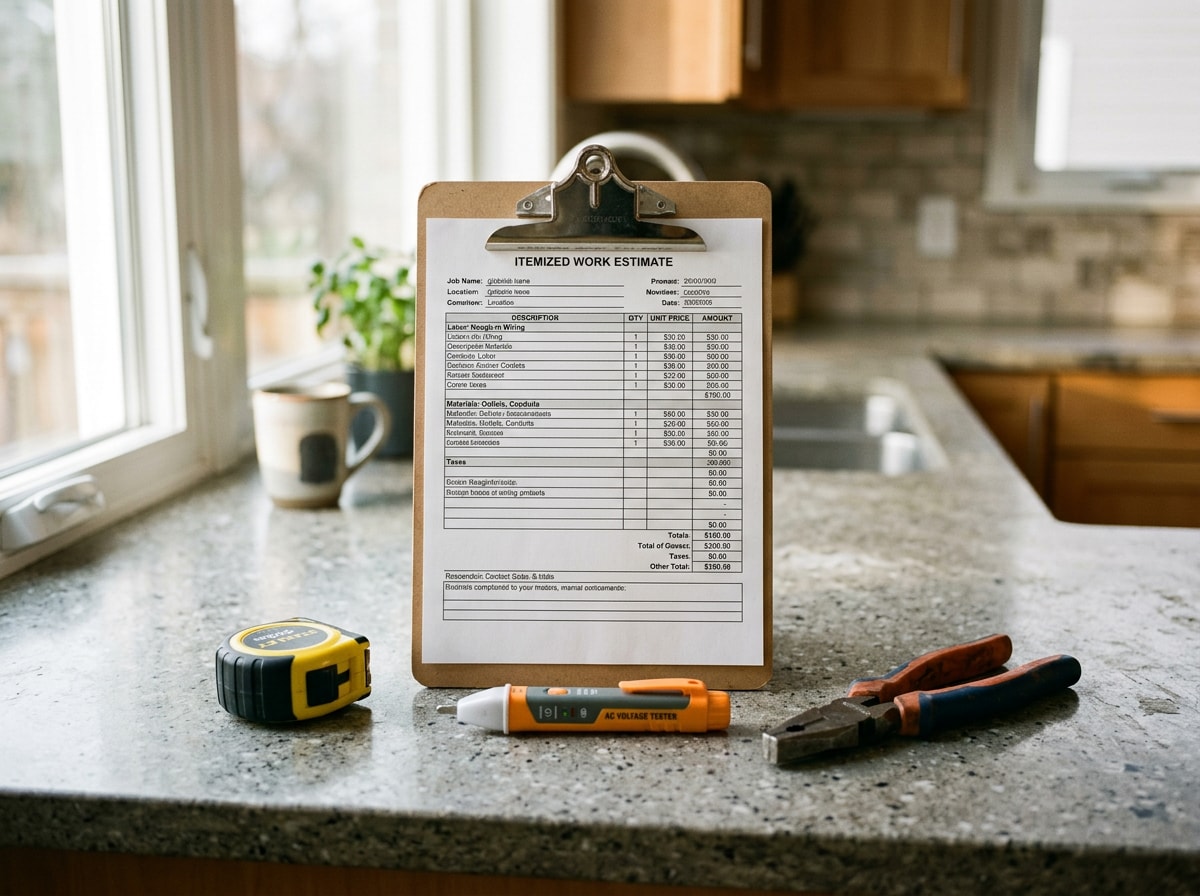
Then get everything above as an itemized written estimate. When you are ready, get a free estimate for your project.
How to Save Money on Electrical Work
The realistic levers are scheduling and scope, not haggling:
- Bundle jobs into a single visit so one service call fee covers everything.
- Schedule inside normal business hours to avoid premiums.
- Clear the panel area, move stored boxes, and unlock gates and outbuildings before arrival.
- Source your own fixtures if the contractor allows it, after confirming warranty terms.
- Request a fixed price quote instead of open ended hourly on well defined work.
- Match the license level to the job rather than defaulting to the most expensive tier.
One 2026 change worth knowing: the federal Energy Efficient Home Improvement Credit (Section 25C), which had covered part of a qualifying panel upgrade, applied only to improvements made through December 31, 2025. The IRS page for the Energy Efficient Home Improvement Credit confirms that cutoff.
If you were budgeting around that credit, rebuild the number. Check current utility and state level programs instead, and confirm anything tax related with a tax professional before you count on it.
FAQ
Do electricians offer free estimates?
Most offer a free estimate for clearly defined installation or replacement work, like a panel swap or a fixture package. Diagnostic and troubleshooting visits are usually billed, because finding the fault is the labor. Many shops credit that troubleshooting charge toward the repair if you approve the work.
How many quotes should you get from an electrician?
Three is the standard advice for anything substantial, and the point is comparing scope line by line, not just totals. In a small rural market, three qualified bidders may not exist. If you can only get two, weight license verification, references, and written scope more heavily.
Do you need a permit for electrical work in Colorado?
Yes, for most wiring, circuit, and panel work. A permit must be obtained before wiring is installed, and it stays valid for one year. Homeowners may wire their own residence only if the property is not for sale, resale, or rent, and the work still has to pass inspection before cover and before permanent power.
What should a written electrical estimate include?
Labor, materials by grade, permit and inspection fees, trip or service call charges, the warranty term, the payment schedule, and an explicit statement about drywall or surface repair. If any of those are missing, the estimate is a number, not a scope.
How long is an electrical estimate valid?
Most contractors hold pricing for 30 days, because copper, breakers, and panel availability move. Ask for the expiration date in writing, especially on a panel or service upgrade quoted months ahead of the work.
How much does it cost to upgrade to a 200 amp service?
Commonly $2,000 to $4,500, covering the panel and breakers, labor, permit and inspection time, and often the meter base and service entrance conductors. Corroded meter bases, damaged masts, and utility coordination push it toward the top of that range.
Why are electricians so expensive?
The hourly rate covers licensing and continuing education, general liability and workers' comp insurance, a stocked truck, travel and fuel, permit and inspection time, and warranty exposure on every job. An unusually low bid usually means something on that list is missing.
Does the estimate change once work starts?
It can, and that is what the change order process is for. Hidden conditions like aluminum branch wiring, buried junction boxes, or an undersized service are the usual culprits. Agree in advance that no additional work proceeds without a written, priced change order.
Get a Written Estimate for Your Cotopaxi Property
Lake Fork Electric is a licensed Colorado electrical contractor serving Cotopaxi, Cañon City, Salida, Westcliffe, and the surrounding high country, with crews working on everything from cabin rewires to solar integration. Browse the full service list on our homepage, or contact us for a written, itemized estimate with permit costs included.