Electrical and instrumentation services in Salida, CO cover two jobs at once: the power that runs your equipment, and the instruments that measure and control what that equipment is doing. Most plants hire two contractors for that and end up with two schedules, two sets of as-builts, and a fight at start-up. Here is what a combined I&E scope includes, what it costs you to split it, and what changed in Colorado code in August 2026.
Electrical and Instrumentation Services We Provide Around Salida
Our crews support water and wastewater treatment plants, food and beverage producers, mining and aggregate operations, small municipal utilities, and light manufacturing along the Highway 50 corridor.
We work two ways. Bring us finished blueprints and specs and we build to them. Or give us the performance requirement and we design the system around it.
Electrical scope
- Raceway installation: cable tray, rigid conduit, EMT, wireway
- Underground raceway and duct bank systems
- Power and control cable pulls, terminations, and megger testing
- Lighting panels, power panels, transformers, and switchgear
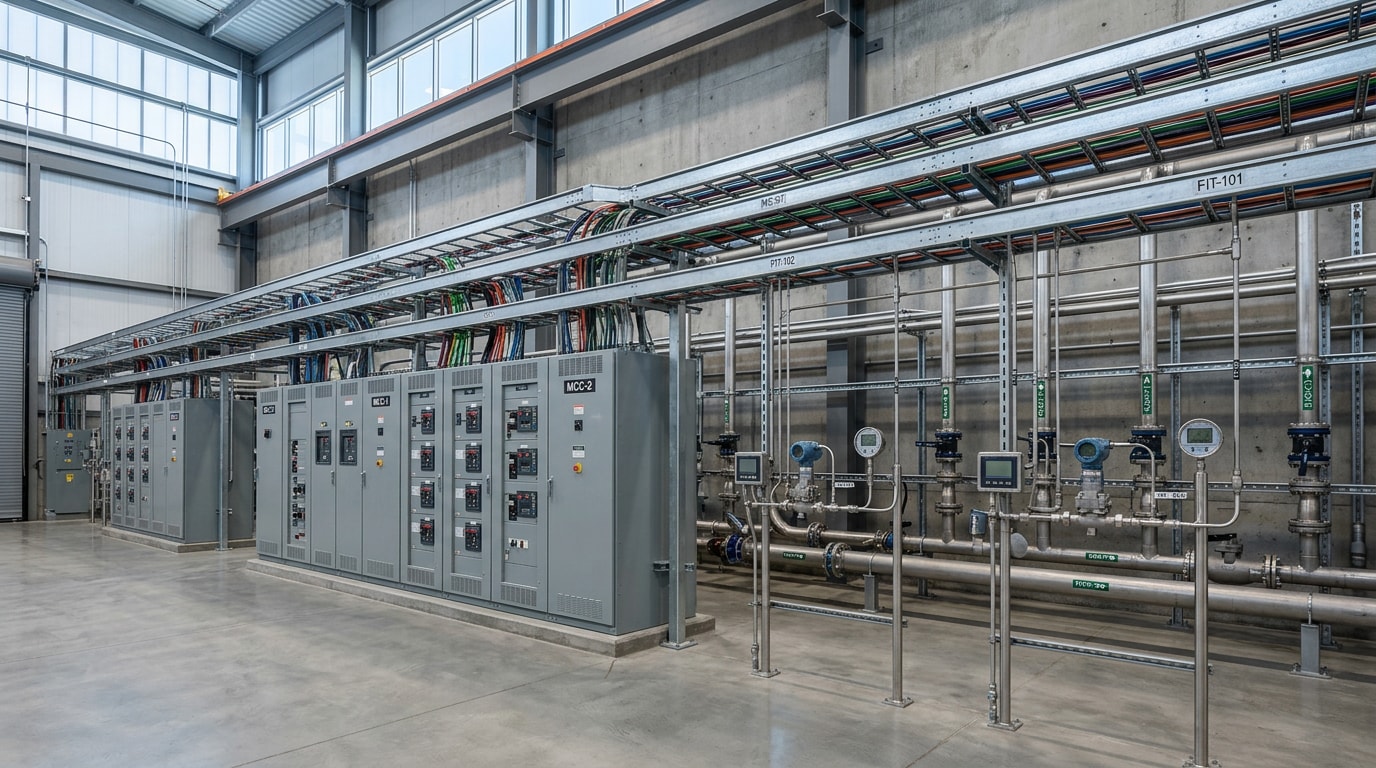
- Motor control center installation, retrofit, and bucket replacement
- Grounding and bonding systems
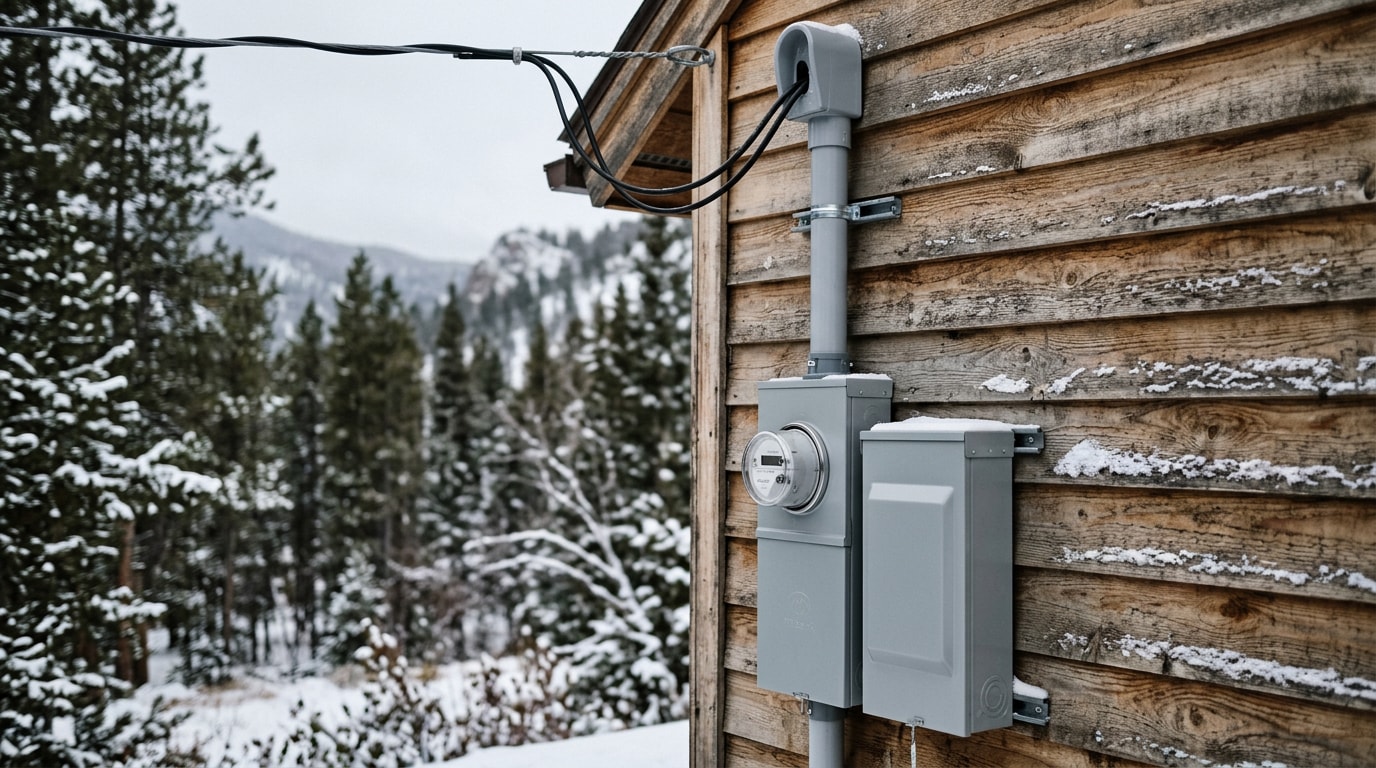
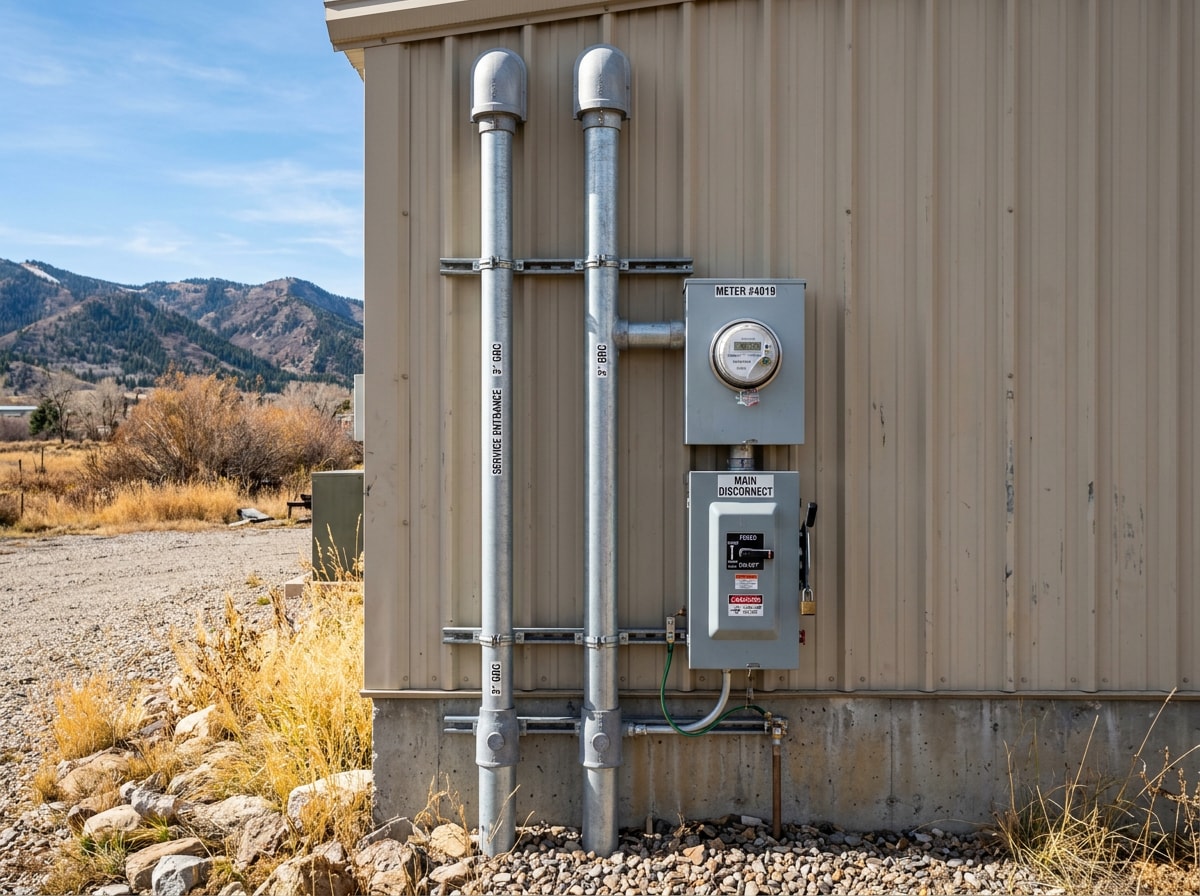
- Service entrance and feeder upgrades
Plant work in Chaffee County usually means motor circuits, three-phase feeds, and bringing older gear up to current code. Service work like electrical service upgrades and commercial electrical construction runs through the same crews, so an MCC swap is routine rather than special order.
Instrumentation scope
- Field device installation: transmitters, switches, analyzers, flow elements
- Process tubing and instrument air supply
- Instrument wiring and shielded cable termination
- PLC and DCS installation, I/O checkout, and testing
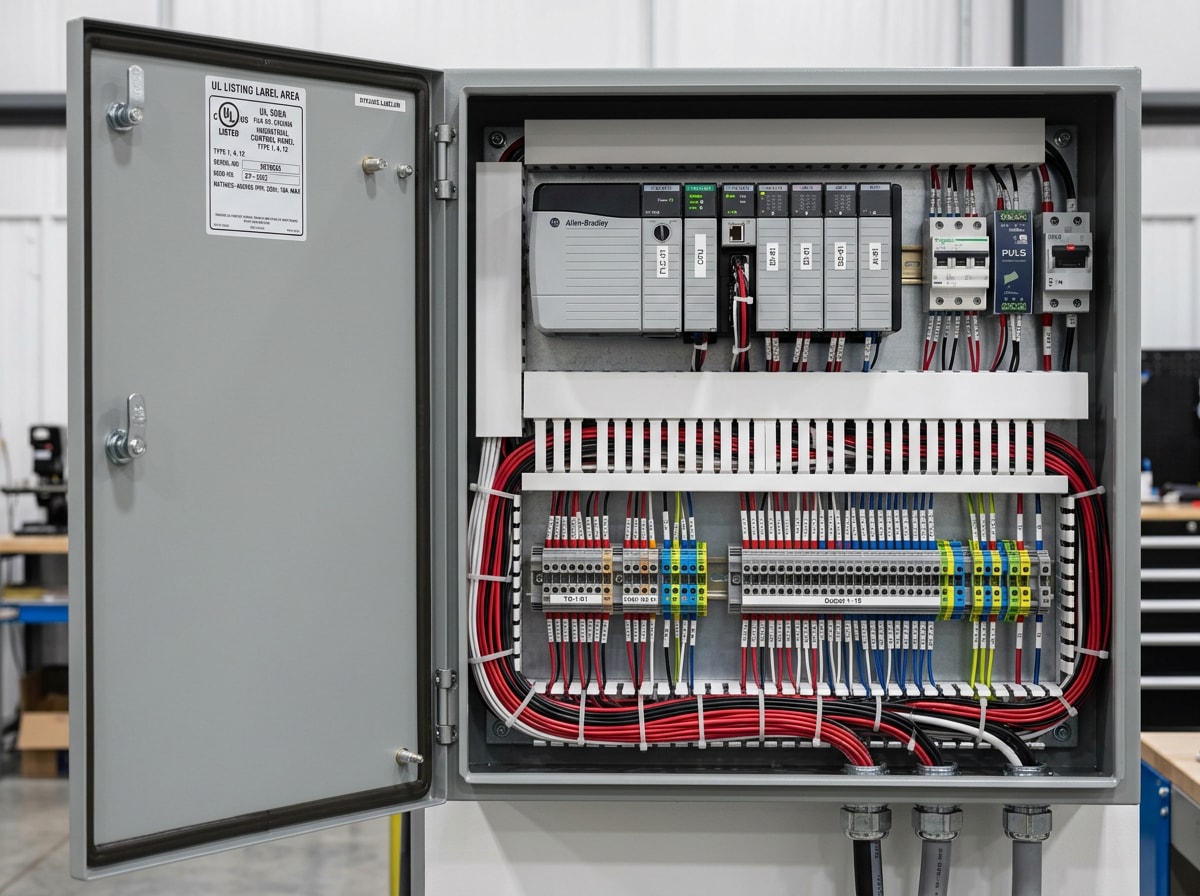
- Control panel fabrication and modification
- Calibration to manufacturer specification
- Loop check, pressure testing, and functional testing
- Commissioning and start-up assistance
What an Electrical and Instrumentation Technician Actually Does
An I&E technician troubleshoots instrument components and assemblies, maintains SCADA systems, replaces end-of-life DCS hardware, calibrates devices against a reference, and commissions or decommissions process systems.
In plain terms: an industrial electrician keeps the plant energized. An I&E technician keeps the plant's measurement layer accurate.
| Industrial electrician | I&E technician | |
|---|---|---|
| Core work | Power distribution, motors, raceway, lighting, controls wiring | All of the same, plus process instrumentation |
| Added skill | Code compliance and load calculations | Calibration, loop checks, control loop tuning |
| Typical call-out | Breaker trips, motor will not start, panel upgrade | Reading drifts, valve hunts, alarm fires with no fault |
| Deliverable at close-out | Red-lined as-builts, inspection sign-off | As-builts plus calibration sheets and loop check records |
| Wrong hire risk | Chases a wiring fault that is not there | Verify license scope before high-voltage work |
A real example from a regional water plant: a flow loop reading about 12% high. Every termination was correct and the I/O card was healthy. The transmitter had drifted past its span, and only a calibration against a traceable reference caught it. Three hours of wire chasing could have been a 40 minute calibration if the loop records had been current.
That is the practical argument for one contractor on both halves. When power and instrumentation live under one scope, nobody gets to say the problem belongs to the other trade.
The 2026 NEC Change That Affects Salida Projects Right Now
Here is the detail most I&E pages in this market have not updated. Colorado is no longer on the 2023 code. On August 1, 2026, the State of Colorado adopted the 2026 National Electrical Code, and all new project submittals must comply with the 2026 NEC, while projects submitted for plan review before that date are permitted to use the 2023 NEC as the basis of design . That guidance was published by Denver Community Planning and Development and the state adoption applies across Colorado jurisdictions.
What that means on a Salida plant project:
- A bid priced in spring 2026 may be priced to the old edition. Ask which code the estimate assumes.
- Anything submitted for plan review now gets inspected against the 2026 NEC.
- Drawing sets held over from last year should be reviewed before resubmittal, not after a correction notice.
If you are working from an existing package, a permit-ready drawing set review is cheaper than a rejected submittal. Our electrical inspection and troubleshooting team flags the gaps before the inspector does.
Permits, Licensing, and Who Pulls Them
In Colorado, electrical contractors, master electricians, and journeymen are licensed at the state level through the Colorado State Electrical Board, which sits under the Department of Regulatory Agencies. Counties generally verify that state license rather than issuing one of their own.
Permits come from the authority having jurisdiction. In incorporated areas that is often the local building department. In unincorporated and rural territory, which covers a lot of Chaffee, Fremont, and Gunnison county ground, the state program handles permitting and inspection through DORA's electrical permits and inspections portal.
Three things to verify before you sign anything:
- The contractor pulls the permit under their own license. A contractor cannot work under a facility's permit or another company's permit.
- The license number checks out. DORA runs a public license verification lookup. It takes about a minute.
- The AHJ is confirmed in writing. On a rural site, assuming the county handles it when the state actually does costs you a week.
For a deeper walkthrough of permit sequencing on larger builds, see our guide to electrical contracting services in Gunnison County.
What UL 508A Certified Means, and the 600 Volt Myth
UL 508A is the UL safety standard for industrial control panels. You will still see contractor pages describe it as covering panels at 600 volts or less. That is the old edition. The current UL 508A scope covers industrial control panels intended for general industrial use operating from a voltage of 1000 volts or less , per the UL 508A standard listing. The ceiling moved up, and the panels that fall under the standard moved with it.
Why the listing matters on your project:
- A listed panel carries a label an inspector can verify on sight.
- A shop-built panel with no listing can be rejected at inspection. That is an expensive surprise at start-up.
- Insurance and plant audit reviews tend to ask for the label before they ask for anything else.
- A qualified panel shop can service an existing listed panel without voiding the listing. An unqualified one cannot.
If you inherited panels with no documentation, start with an inventory: enclosure type, short circuit current rating marking, and whether the label is still legible. That inventory drives everything else.
Calibration and Loop Checks Are Not Part of the Wiring Price
This is the line item facility managers most often cut, and the one that most often comes back.
A loop can be wired perfectly, land on the correct PLC input, and still report the wrong number. The transmitter's zero and span were never verified. Continuity proves the wire. It proves nothing about the measurement.
Calibration only counts when it is documented against a reference. Metrological traceability requires an unbroken chain of calibrations to specified reference measurement standards, typically national or international standards , as defined in the NIST policy on metrological traceability. Simply using an instrument that was calibrated at NIST is not enough on its own to make a measurement result traceable.
What you should receive at close-out:
| Deliverable | What it proves | Who should hold it |
|---|---|---|
| Loop check sheet | Signal path from field device to HMI is correct end to end | Plant maintenance file |
| Calibration record | As-found and as-left values at each test point | Plant QA or compliance file |
| Reference standard certificate | The test equipment itself is traceable | Contractor, available on request |
| Marked-up P&ID and loop drawings | What was actually installed, not what was drawn | Plant engineering |
| Panel label and component list | Listing status and SCCR of the assembly | Plant engineering and insurer |
If a bid does not break calibration and loop check out as separate lines, ask why. It usually means they are not being performed.
Service, Maintenance, and Outage Support
Most of our calls are not greenfield builds. They are about keeping existing assets running.
Maintenance scope includes:
- SCADA and DCS system service and hardware replacement
- Density, displacement, and nuclear instrumentation service
- Coriolis meter calibration
- PID loop tuning when a control loop starts hunting
- Annual instrument calibration cycles
- Legacy equipment service, including pneumatic instruments still running alongside modern transmitters
We also cover the parts that get skipped on a lot of quotes: after-hours emergency response, planned turnaround and outage support, and documentation catch-up on plants that have drifted away from their as-builts.
Safety procedure is part of the quote, not an extra. Servicing and maintenance work where unexpected energization could injure someone falls under OSHA's requirement that the employer establish an energy control program with procedures, employee training, and periodic inspections before any servicing or maintenance is performed . The full text sits in OSHA 29 CFR 1910.147. If a contractor cannot describe their lockout procedure on your equipment, that is a disqualifying answer.
Control System Acronyms, Decoded
Scope documents are full of shorthand. Here is what it means on the ground:
- SCADA: supervisory control and data acquisition. Centralized monitoring and control across sites that may be miles apart, such as a municipal water system with remote wells and tanks.
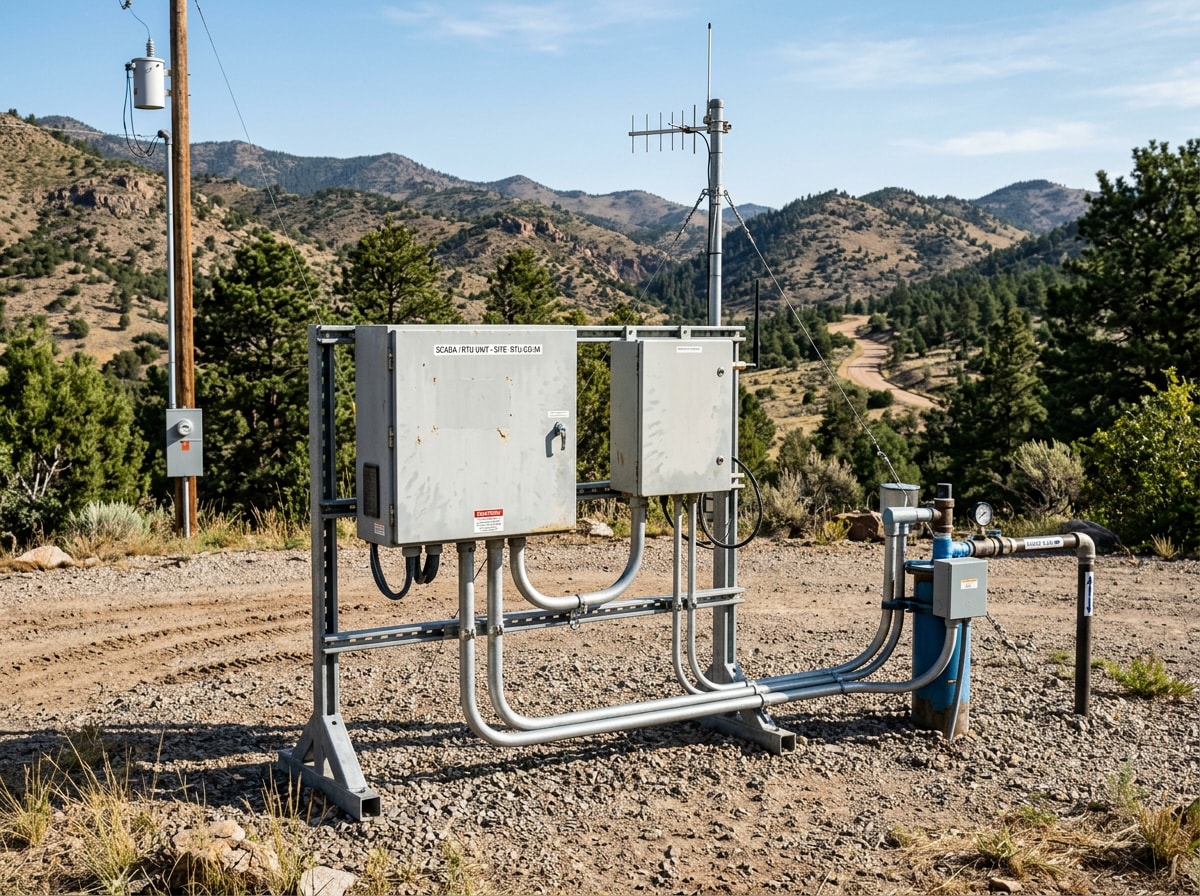
- RTU: remote terminal unit. The field device that collects data at an unmanned site and sends it back. Common on irrigation headworks and pipeline stations.
- PLC: programmable logic controller. The local controller running sequence and interlock logic at the equipment.
- DCS: distributed control system. Plant-wide process control with integrated operator interface, typical on continuous process plants.
- IED: intelligent electronic device. Microprocessor-based relays and meters inside switchgear.
- IACS: industrial automation and control systems. The whole hardware, software, and network framework behind process control.
Related Work We Handle on the Same Sites
Plant and facility clients rarely need only one trade. The same crews also deliver:
- New residential electrical construction for operator housing and caretaker units
- Electrical remodeling for office and lab buildouts inside plant property
- Commercial lighting installation and lighting upgrades and replacement for process areas and yards
- Solar wiring and electrical integration and solar system design where generation offsets plant load
- Backup generator wiring and installation and surge protection installation for critical control loads
Browse the full electrician service category to see the rest.
Where We Work
We are based in the central Colorado mountains and run crews across a wide service radius: Salida, Buena Vista, Cotopaxi, Canon City, Westcliffe, Gunnison County, Lake City, and Monte Vista.
Scheduled project work is typically booked by the week. Emergency calls get same-day dispatch where travel allows, and mountain travel time is quoted honestly rather than buried.
Ready to scope a project? Get a free estimate and we will tell you which code edition your package needs to meet before you spend money on drawings. More about the company and our full service list is on the Lake Fork Electric homepage.
FAQ
What does E&I stand for in manufacturing?
E&I stands for Electrical and Instrumentation. The acronym is used elsewhere in HR and insurance, but in process and manufacturing industries it refers to the combined electrical and instrumentation discipline.
What is the difference between electrical and instrumentation?
Electrical work moves and distributes power. Instrumentation measures and controls process variables such as pressure, temperature, level, and flow. At a water treatment plant, the electrical scope powers pumps, motors, and lighting. The instrumentation scope watches levels, chemical dosing, and filtration.
Do you need a permit for electrical work in Colorado?
Yes. New installation, alteration, or extension of permanent wiring requires a permit. The licensed contractor pulls it under their own license. Depending on the site, the permit comes from the local building department or from the state program through DORA.
Which electrical code applies to my Salida project in 2026?
The 2026 NEC. Colorado adopted it with an August 1, 2026 effective date. Packages submitted for plan review before that date could stay on the 2023 edition, so check the submittal date on any carried-over design.
How often should process instruments be calibrated?
Follow the manufacturer's interval and your own regulatory or quality requirement, then adjust based on as-found data. If a device is consistently in tolerance at every check, the interval can usually stretch. If it drifts, shorten it. Compliance-critical loops, such as chemical feed and effluent monitoring, generally hold the tightest schedule.
Can one contractor do both the electrical and the instrumentation work?
Yes, and it is usually cheaper. A single scope means one schedule, one set of as-builts, and one party responsible when a loop reads wrong at start-up. Splitting the work across two firms puts the commissioning risk on you.
What should an I&E bid include that most do not?
Separate line items for calibration and loop check, the lockout procedure for your equipment, the panel listing status, the AHJ named in writing, and the code edition the price assumes. If any of those are missing, ask before you compare numbers.
Do you handle emergency and after-hours calls?
Yes. Emergency response, planned outage support, and turnaround coverage are part of our standard service offering. Contact us to set up a response agreement before you need one, which is always faster than calling cold at 2 a.m.